The stay is actually amazing.
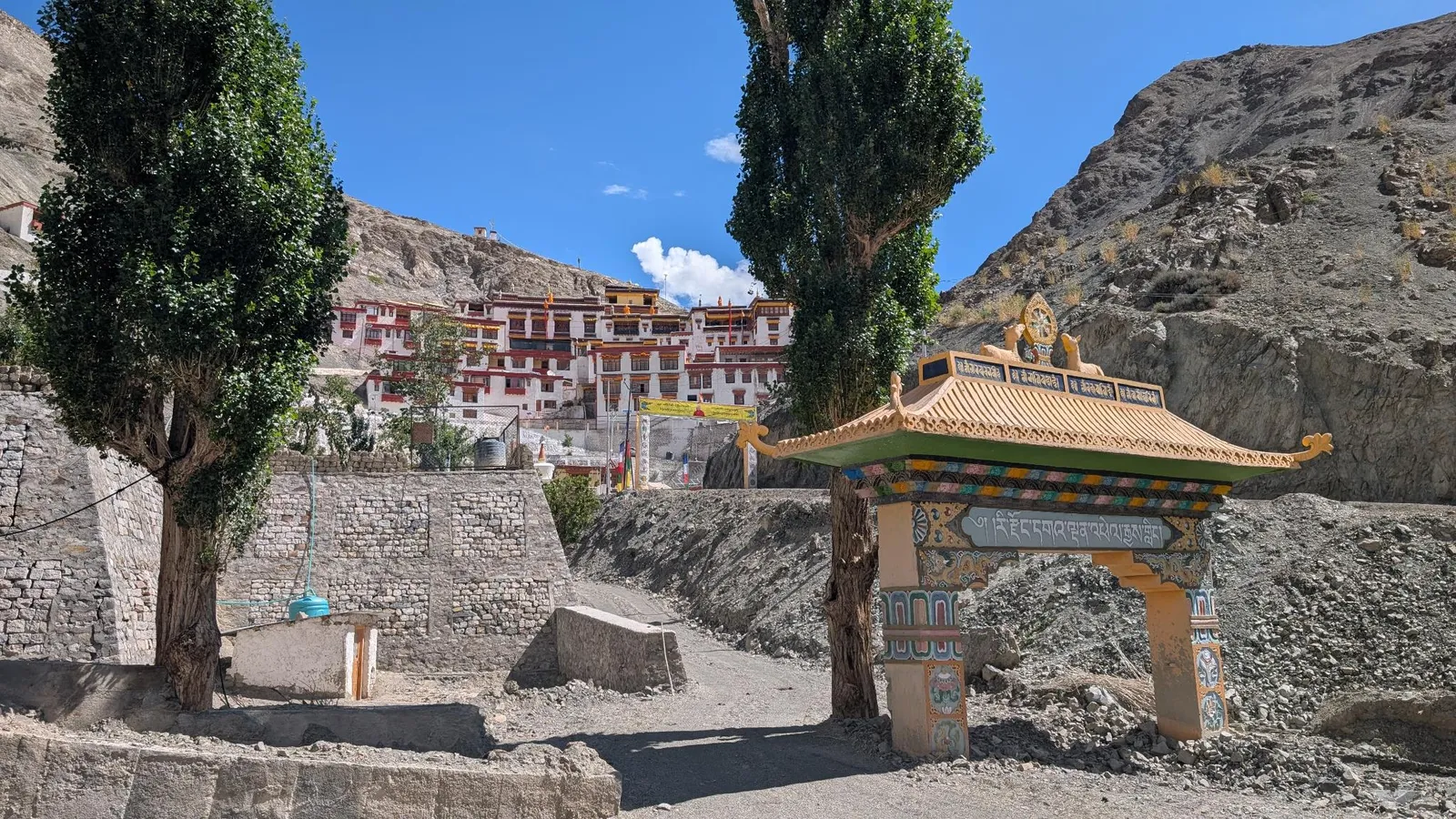
The view from my room:
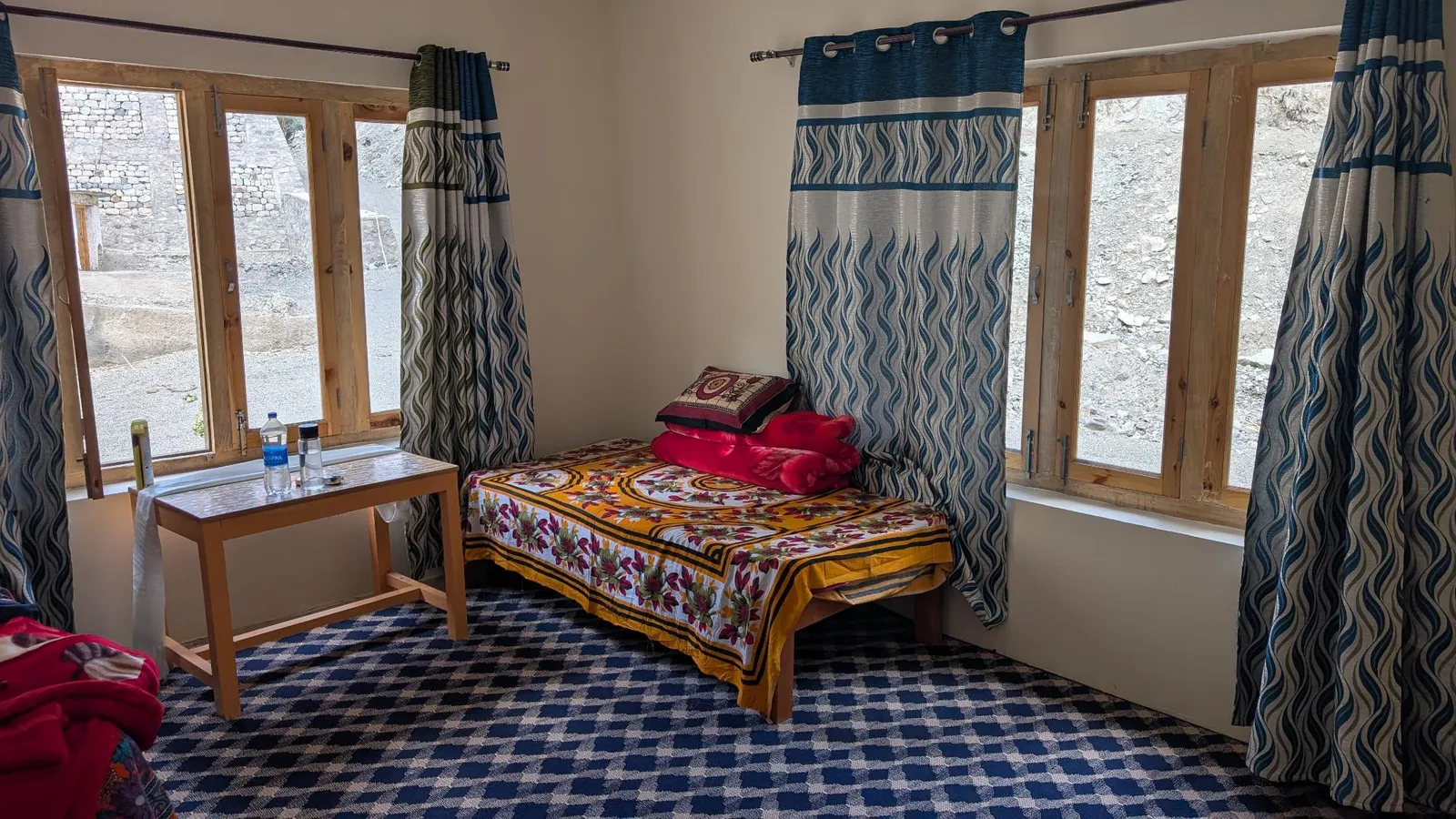
My room itself:
The guesthouse inside:
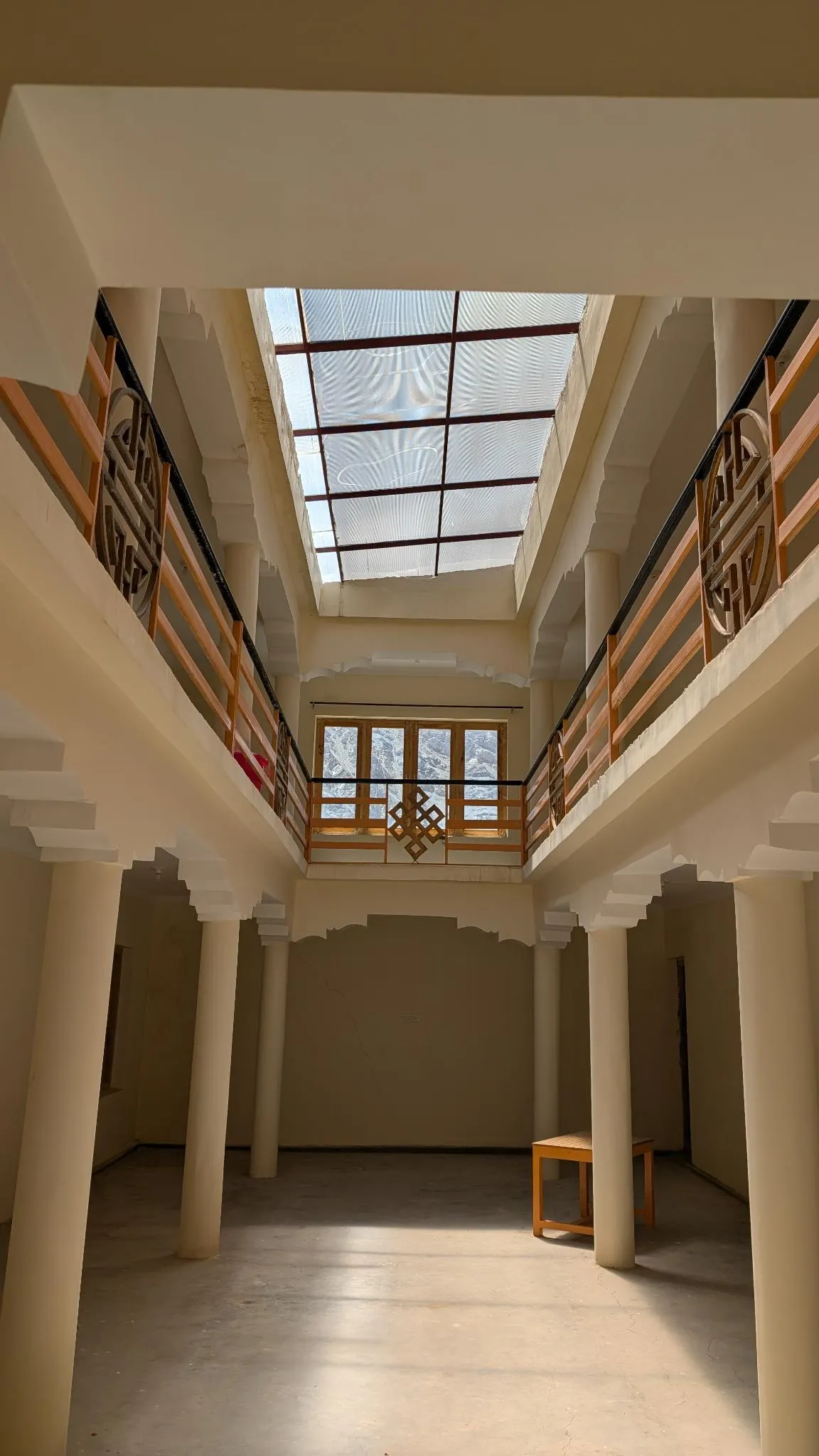
It's crazy how big they built these things.
The monastery.
The guesthouse.
Everything.
The monastery I can understand.
There used to be many more monks here.
It's surely several centuries old.
But the guesthouse.
That's new.
Brand new.
Making it that big is an interesting choice.
Nowadays fewer people gravitate towards those places.
The pull toward a more capitalist lifestyle has become stronger.
People want to have fun.
Get a shiny job.
Build a career.
Be admired.
For what they have.
Being, however?
Peace.
Health.
Bliss.
Simplicity.
Those don't seem to be the values most of us are working toward.
Anyway.
I absorb the place.
Summer here is awesome.
Actually...
here is awesome.
I go back into my room.
Time for a shower.
I turn the red knob.
Nothing.
No hot water.
Interesting.
My mind immediately produces an explanation.
Of course.
Monks.
Simple life.
No unnecessary luxury.
Only to later learn from Tsewang:
Nope.
They simply haven't connected the hot water in the guesthouse yet.
Everyone else has it.
I crack a little.
Again.
Expectation meets reality.
And somehow, for a brief moment, I feel as if I'm doing the real monk stuff here.
Which I don't, because I don't need need to shower right now.
Instead I write.
One hour.
Two hours.
The days here don't begin with breakfast.
I like that.
First:
Time.
Space.
Your own morning.
Then, at nine:
Food.
The clock approaches 8:30.
Time to head down to the school.
The place where Tsewang lives, works and where we agreed to meet.
The morning is colder than the sunlight makes it look.
I move a chair into the sun.
Most of the schoolyard is only just beginning to meet it.
The tops of the pear, apricot and apple trees enter their dance in the golden light first.
I sit there.
Just sitting.
No rush.
Nothing.
No clue about time.
Not necessary.
I don't know when Tsewang will come.
But he does.
He walks out of the building.
Loose pyjamas.
Batman logos on the trousers.
Arms behind his back.
Walking slowly like an old wise man.
Then he speaks.
Low.
Really low.
A surprisingly deep voice coming out of this young guy in Batman pyjamas.
Fitting.
Both to Batman.
And to the place.
And he isn't alone.
With him is the small monk I noticed yesterday.
Dawa.
Running around.
Jovial.
Curious.
But shy.
I try to communicate with him.
Playfully.
Carefully.
He looks at me.
I look at him.
And whatever I do...
he turns away.
Okay.
But I was fascinated by him.
That young.
Alone.
How is he doing?
Who was he?
How did he end up here?
Good that we have some more time.
One day.
To be exact.
My Agenda
Veeeery complicated stuff:
Breakfast.
Find a way to donate.
Ask whether I can stay another night.
Get some work done.
Spend time with Tsewang.
Easy.
Morning in Rizong
There isn't much to say about breakfast.
The non-monk cooks aren't there yet.
Basically, it's Tsewang, Dawa and me.
And one really old monk.
I try to initiate some contact.
Unsuccessful.
Tsewang explains that he's basically in another world.
Hard of hearing.
Different language.
So be it.
We eat.
That's it.
The food is...
actually quite varied.
I expected less.
Butter tea.
Milk tea.
Water.
For food:
Tsampa.
Biscuits.
Bread.
Spreads that Tsewang fetches for me.
I'm hungry.
Really hungry.
I could eat a lot.
More than seems normal here.
I notice myself holding back slightly.
No need to look greedy.
This becomes a recurring little conflict for me in Ladakh.
I often could have eaten more.
But everybody around me seemed finished.
Or I didn't want to make them feel as if they prepared too little.
So:
“No, no. Enough.”
Helmut & Jun were invited to a morning ritual.
I wasn't.
Rizong is my first monastery.
Is that normal?
Is it normal to not meet any monks?
Who knows.
At this point in time, I don't.
And just flow with it.
Breakfast finishes.
I ask Tsewang:
“How much shall I donate?”
“Three hundred is okay.”
Three hundred?
That feels ridiculous.
“Where can I donate?”
“There.”
A monk enters.
Perfect timing.
I give one thousand.
Which somehow still feels too little.
Then the important question:
“Can I stay one more night?”
“Yes. No problem.”
Done.
Awesome.
We leave.
And slowly—
in Tsewang's peaceful speed—
walk down the stairs towards the school.
His arms go behind his back again.
Slow steps.
No rush.
Batman on the ground.
I absorb the place even more.
The mountains surrounding it.
Protecting it.
The monastery sitting inside them.
The silence.
The clear feeling that this place is energetically being cleaned.
Including me.
This is a one-of-a-kind experience.
And something becomes clearer:
It's not the monks teaching me anything.
It's the silence.
And Tsewang.
Island of Connection
Tsewang asks:
“Do you need Wi-Fi?”
I stop.
“Wait.”
“There is internet here?”
He smiles.
“Only here.”
Of course.
In the schoolyard.
One tiny island of internet.
In one of the most secluded places I've ever been.
Perfect.
I connect my phone.
And a revelation is waiting for me.
Delivered through Wi-Fi.
From the least expected source.
Outgrowing the Illusion
A message appears.
From one of the closest members of my family.
Aunt Heidrun.
Simple.
“How are you doing?
Thinking about you.”
I answer almost automatically:
“Great. I'm growing fast.”
Send.
And almost in the same instant...
something inside me objects.
Not quietly.
It rushes through me like water forced through a narrow mountain valley.
Like a ray of light suddenly entering a black room.
Like a bonfire catching on a freezing winter night.
Like the smell of a rose changing the air around it before you even notice the flower.
I grab the phone again.
No.
That's not it.
What surfaces is enormous.
I'm not growing.
I cannot even grow.
I can only remove unnecessary illusions.
Illusion.
There it is again.
People had talked about it back home.
Melroy talked about it.
Pradeep talked about it.
Arif talked about it.
Monks talked about it.
The Dalai Lama talked about it.
Tsewang talked about it last night.
Illusion.
I had heard that word...
so. many. times.
But it had always remained a word.
Philosophy.
Something other people had experienced.
Something intelligent people could discuss.
And suddenly...
it becomes tangible.
Maybe for the first time in my life I understand:
I don't necessarily need anyone to teach me.
I don't need to understand every symbol in every monastery.
I don't need to collect more and more concepts.
I don't need to become...
more.
That's part of the illusion.
I cannot become more.
I can only remember what I truly am.
That's why doing more sightseeing feels pointless.
Insight-seeing, however, doesn't.
And that benefits from different things.
Silence.
Peacefulness.
Calmness.
Something is covering our truth.
Layers.
Roles.
Fear.
Expectation.
Identity.
Ideas of who I should be.
Ideas of who I should become.
Maybe growth isn't always addition.
Maybe sometimes...
growth is subtraction.
Removing.
Remembering.
Letting the illusion fade.
I sit there with the phone in my hand.
But...
my understanding is still incomplete.
Very incomplete.
I felt the illusion.
I now believe there is an illusion.
But I cannot yet explain it.
Something moved.
Something opened.
But I don't have the words.
Yet.
Conveniently...
there is a Buddhist teacher sitting under the next tree.
Tenzin Tsewang
I look up.
Back into the here.
I think it's time for you to properly meet him.
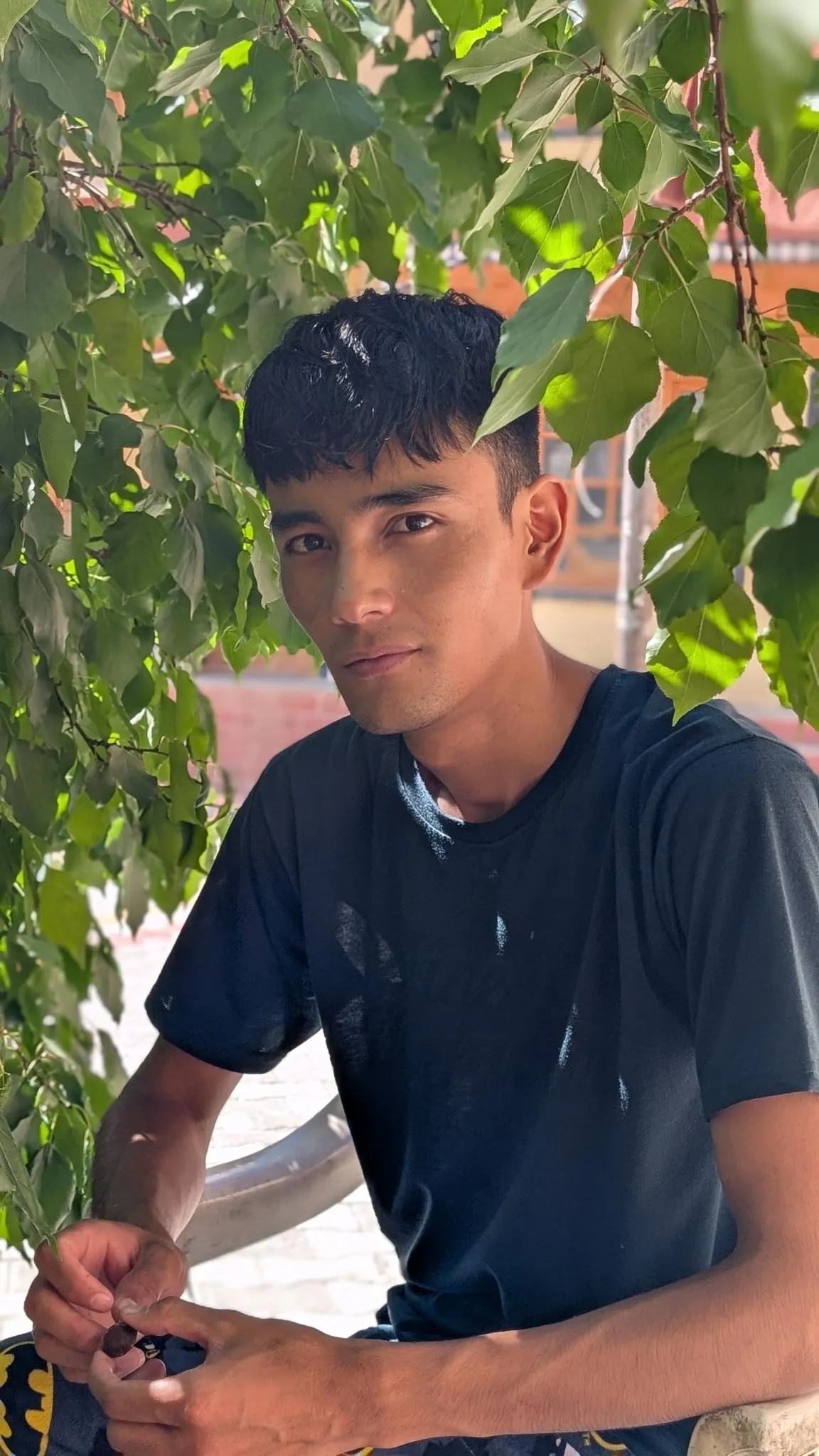
A wise soul in a young body.
Batman trousers included.
By now the sun has moved.
So do we.
Into the shade of the trees.
I sit under one.
Tsewang under another.
Stomachs full.
Minds peaceful.
My agenda said:
Get some work done.
But something stands in its way:
A question.
I don't even remember which one came first.
Probably something about Buddhism.
That becomes a pattern with us.
One question.
One answer.
Another question hiding inside the answer.
And suddenly...
hours disappear.
Tsewang isn't loud.
He doesn't share like somebody who wants you to know he's teaching.
He talks slowly.
Low.
Thinks.
Stops.
Looks.
Answers.
Sometimes he gives me half an answer.
Which creates three new questions.
Perfect.
I have about a thousand.
And stories myself.
Around us, Rizong continues doing whatever Rizong does.
Dawa keeps appearing.
Running somewhere.
Carrying something to one of the monks.
Disappearing.
Coming back.
A tiny human delivery service.
And I?
I discover another advantage of sitting underneath these trees.
Apricots.
Right there.
I can simply reach up.
Pluck one.
Eat it.
Then comes an old pilgrimage game.
The seed.
A glass.
Aim.
Spit.
Miss.
Pick it up.
Try again with another seed.
Meanwhile...
we discuss Buddhism.
Naturally.
At some point I tell Tsewang something that had been bothering me.
“Yesterday I walked through the monastery.”
“Yes.”
“So many colours.”
“Yes.”
“Statues. Images. Buddhas everywhere. People bowing. Praying.”
He nods.
“And honestly?”
I pause.
“I felt almost nothing.”
He looks at me.
“Nothing?”
“Maybe even the opposite.”
He waits.
“It pushed me away a little.”
No offence taken.
Good.
I continue.
“It reminds me of Hindu temples sometimes. So many images. So many symbols. Buddha almost looks like a god.”
He smiles.
And begins separating things.
Not Buddhism from Buddhism.
But my idea of Buddhism...
from Buddhism.
He explains that there isn't just one expression of it.
Different traditions.
Different regions.
Different approaches.
Theravada.
Mahayana.
And within the broader Mahayana world, Tibetan Buddhism with its Vajrayana practices.
Within Tibetan Buddhism again, different schools:
Nyingma.
Kagyu.
Sakya.
Gelug.
Different rituals.
Different emphasis.
Different appearances.
I try to summarize what I think he means.
“Same mountain.”
He smiles.
“Different paths?”
“Something like that.”
I look back towards the monastery.
“So all this...”
I point vaguely at everything.
“...isn't Buddhism?”
He laughs.
“It is Buddhism.”
Pause.
“One type of Buddhism.”
Then, in his words:
“The external message is different.
The internal one the same.”
Aaaah.
His reaction.
Not only a “wow.”
More like:
“Whouuuh...”
Long.
Slow.
Three seconds maybe.
A proper Tsewang whouuuh.
That bit about Buddhism changes something.
Because I had been doing what we humans do incredibly well:
See one expression of something.
And mistake it for the whole.
Then Tsewang adds:
“Buddha never said he is God.”
That interests me.
“No?”
“No.”
“Then why is everybody bowing?”
“Why are there huge statues of him?”
He thinks.
Culture.
Respect.
Belief.
Symbolism.
Ways of reminding oneself.
Ways of strengthening faith.
But Buddha himself?
A teacher.
A person pointing towards a path.
Not some creator god sitting above humanity demanding worship.
And again...
something in me relaxes.
That makes much more sense to me.
I tell him that this is something I find fascinating in the West too.
A teacher appears.
Says something.
People experience something.
Then time passes.
Institutions grow.
Symbols grow.
Rituals grow.
And sometimes...
the symbol becomes bigger than the original point.
I make the connection I so often make.
“Jesus too.”
Tsewang looks at me.
“He wasn't walking around saying: Look how godly I am.”
At least that's not the message I take from him.
For me, his power lies in the opposite idea.
Look what a human can be.
Look what might be possible through us.
Not:
I am everything and you are nothing.
Rather:
Look.
You too.
Tsewang goes quiet.
Looks at me.
Then:
“Whouuuh...”
Long.
Low.
Nice.
My turn.
I grab another apricot.
But now another question has formed.
If Buddha wasn't ultimately asking people to worship him...
what was the point?
“So what is enlightenment, then?”
Tsewang thinks.
“Awakening.”
“Awakening?”
“Yes.”
“From what?”
He looks at me.
“From suffering caused by attachment to the illusion.”
Illusion.
There it is.
Again.
I laugh slightly.
Of course.
“So basically... seeing the illusion for what it is?”
“Yes.”
“Seeing through it?”
“Yes.”
“Being awake?”
“Yes.”
My turn for a “Whouuuh.”
Okay.
That suddenly makes the word enlightenment much less mystical.
Not necessarily glowing.
Not floating.
Not becoming some supernatural creature.
Awake.
Seeing.
Recognising.
“Although... some actually become light.”
I spit another apricot seed towards the glass.
Miss.
“So enlightenment can happen from one moment to the next?”
Tsewang thinks.
“Yes.”
“Just like that?”
“Yes.”
“Suddenly?”
“Yes.”
I look at him.
“So it can work like that.”
“Yes.”
“But it doesn't have to?”
“No.”
Whouuuh.
Okay.
That changes things again.
I had somehow imagined enlightenment as the ultimate achievement at the end of one long staircase.
Step.
Step.
Step.
Step.
And eventually:
Done.
Congratulations.
Level completed.
Apparently...
not necessarily.
For some, awakening can happen suddenly.
One moment:
asleep.
The next:
something is seen.
Really seen.
But the path towards that moment doesn't have to look the same for everyone.
And before full awakening?
There can be glimpses.
Moments of clarity.
Moments where the illusion becomes transparent.
And then...
you get pulled back.
You see clearly.
Then don't.
You recognise something.
Then lose it again.
You become conscious.
Then return to automatic living.
“So you can fall back along the way?”
“Of course.”
This time the whouuuh is mine.
That feels...
very human.
For a moment neither of us says anything.
Cold morning forgotten.
Shade above us.
Apricot trees.
Dawa running somewhere in the background.
Closing some water pipe.
Then:
“So what puts us back to sleep?”
He thinks.
Attachment.
Desire.
Habits.
Fear.
Identity.
Distraction.
The things that keep pulling our awareness outward.
Away from seeing.
Away from being.
And suddenly the monks begin making more sense too.
Renunciation
I ask:
“So that's why monks renounce things?”
“Yes.”
Traditionally, he explains, some families would have the firstborn child remain with the household while another might enter monastic life.
Different families.
Different circumstances.
But the idea itself makes sense.
No marriage.
No family of your own.
No sex.
Less property.
Less obligation.
“Why exactly?”
“Attachment.”
Family creates attachment.
Sex creates attachment.
Relationships create attachment.
Ownership creates attachment.
Responsibility.
Desire.
Distraction.
Not because any of those things are necessarily evil.
But if your entire life is dedicated to waking up...
if you're not VERY careful, they might be powerful forces pulling you into the world.
Fair.
Very fair.
He adds something along the lines of:
“Monks are basically normal people.
Just without those things.”
I laugh.
“Normal people?”
“Yes.”
“The body doesn't stop working.”
He laughs.
Obviously.
Even an elevated state of mind does not magically deactivate the reproductive system.
Unfortunately.
Or fortunately.
Depending on perspective.
Desire doesn't disappear because somebody puts on robes.
And then...
my modern brain causes trouble.
Because I look around.
Smartphones.
I've seen them everywhere.
Monks with smartphones.
Monks watching things.
Monks messaging people.
The old world tried to remove distraction by removing the village.
Family.
Marriage.
Sex.
Possessions.
Nightlife.
Endless social interaction.
You enter a monastery.
Done.
Silence.
But today?
You can carry the entire world into the monastery in your pocket.
News.
Status.
Arguments.
Messages.
Comparison.
Entertainment.
Desire.
Infinite distraction.
A world inside a rectangle.
The illusion evolved.
It became digital.
I look at Tsewang.
“Okay...”
He waits.
“Then shouldn't social media also be renounced?”
He laughs.
I laugh.
But I'm actually serious.
“If the purpose is to remove distraction...”
I point at the phone.
“...this thing might contain more distraction than an entire village did five hundred years ago.”
He thinks.
“Whouuuh.”
No defence.
No elaborate excuse.
Just:
“Whouuuh.”
Maybe Maya—
the illusion—
got Wi-Fi.
I laugh at the thought.
“What?”
“Nothing.”
Pause.
Looking up into the leaves of the tree.
“Actually...”
I explain it.
He laughs too.
But there's something serious underneath it.
The purpose of renunciation can remain unchanged...
while the thing we need to renounce changes completely.
And maybe that is true outside monasteries too.
The question isn't necessarily:
What ancient thing am I supposed to give up?
Maybe the timeless question is:
What owns my attention?
Does it benefit me, or harm me for what I want to achieve?
And suddenly we're talking about enlightenment again.
Not as some final mystical event.
But as something much more practical.
Awareness.
Seeing what influences you.
Seeing what you're doing.
Seeing what is being done to you.
Not blindly following.
Not automatically reacting.
Staying awake.
He asks:
“You really don't use Instagram, WhatsApp, etc.?”
“No.”
“Why?”
“First?
Because it doesn't make me happier.”
And second...
that takes us straight into my world.
The Illusion Evolves
I tell Tsewang about some of my own choices.
Why I increasingly try to follow myself instead of simply accepting the digital environments being built around me.
Why I like open-source tools.
Why I distrust systems that are technically “free” while harvesting enormous amounts of information about their users.
“If something is free...”
I tell him.
“...very often, you are the product.”
He looks interested.
So I explain.
Tracking.
Data.
Algorithms.
Recommendations.
Systems deciding what gets shown.
What stays invisible.
What we click.
What we become angry about.
What we compare ourselves with.
What keeps us scrolling.
Not because technology itself is evil.
I love technology.
Obviously.
But because I want to know when something is shaping me.
I want choice.
I want to stay conscious inside it.
Tsewang listens.
Now I'm teaching.
A strange reversal.
He opens my world through Buddhism.
I open his through technology.
He thinks for a while.
Then asks:
“What if somebody was enlightened today?”
“What do you mean?”
“If somebody sees everything.”
Pause.
“Would people in power try to remove him?”
“Remove him?”
“To not lose power.”
Hmm.
Dark question.
I think.
“I don't know, man.”
And I really don't.
Maybe.
History isn't exactly lacking examples of people being attacked for threatening existing systems.
But another thought seems more important to me.
“We also have to be careful not to blame some mysterious them for everything.”
He listens.
“We gotta remember.
We are the people in power.
Not someone else.”
We use the systems.
Feed them.
Reward them.
Participate in them.
Scroll through them.
We give them our attention.
Again.
And again.
And again.
“The few can only steer billions if the billions stay scattered.”
Tsewang thinks.
“Polarisation.”
“Yes.”
People splitting into camps.
Us.
Them.
Right.
Wrong.
Good.
Bad.
Each group increasingly unable to hear the other.
Another illusion?
Maybe.
Another way of falling asleep?
Maybe.
We sit with it.
“Whouuuh...”
And eventually...
reality intervenes.
I try to do some work.
Dawa
One problem:
My laptop is infinitely more interesting than whatever I'm trying to do on it.
For Dawa.
Tsewang's student.
The small lama who wouldn't even properly look at me this morning.
Now he stands in front of me, excited by the sight of a laptop.
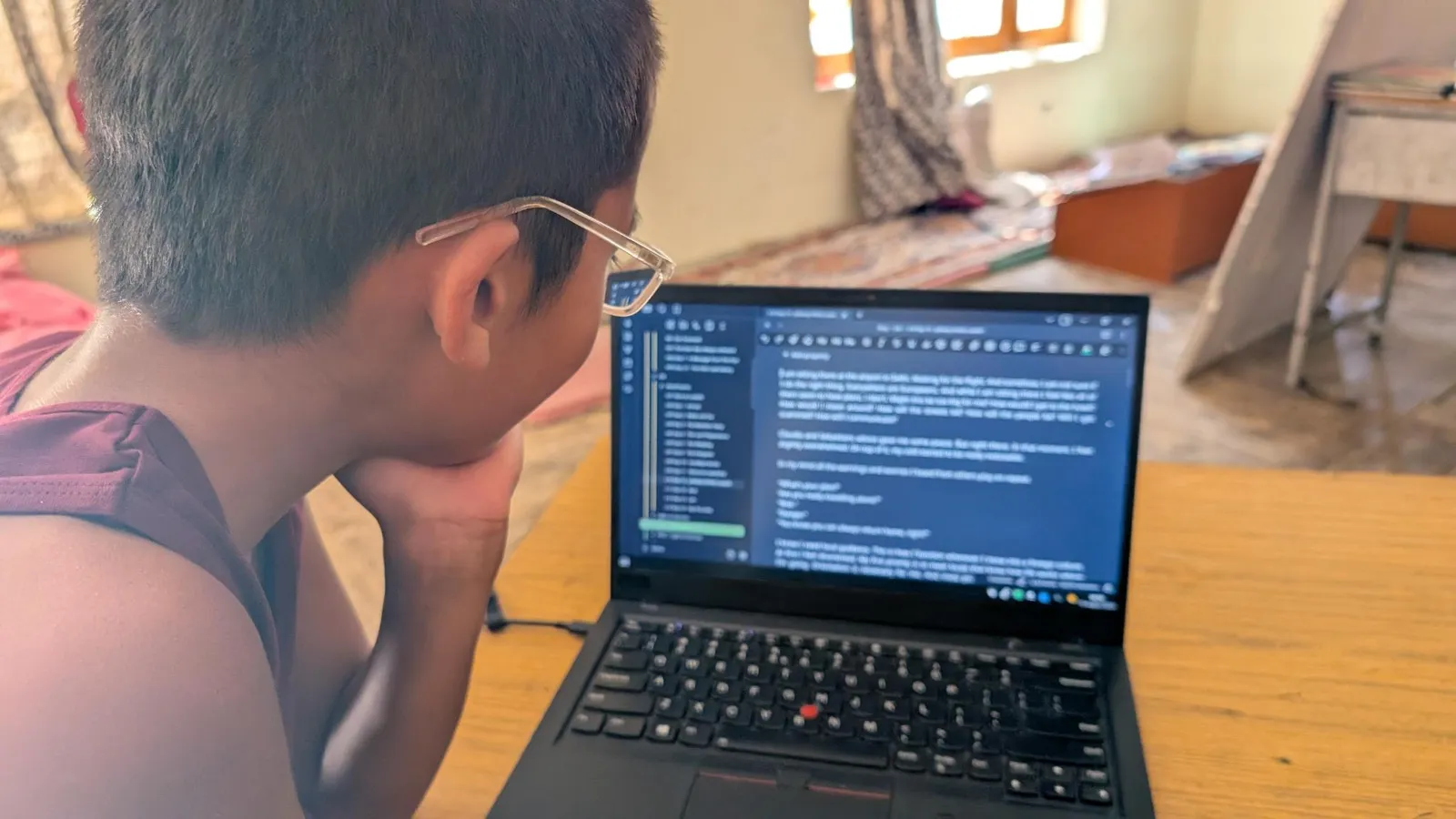
Dawa stares.
Comes closer.
Looks.
Touches.
Learns how to type.
Learns how to delete.
Retreats.
Returns.
Productivity?
Gone.
Relationship?
Progressing quickly.
Within two days we go from:
Too shy to even look at each other properly.
To:
Who cares that we don't share a language?
Hands.
Feet.
Faces.
Gestures.
Done.
Communication achieved.
Somebody calls his name.
And he keeps doing his little jobs.
Running around.
Bringing things to monks.
Coming back.
Disappearing again.
I also get a glimpse into what they study.
Through books.
And something catches my attention.
Yogasanas.
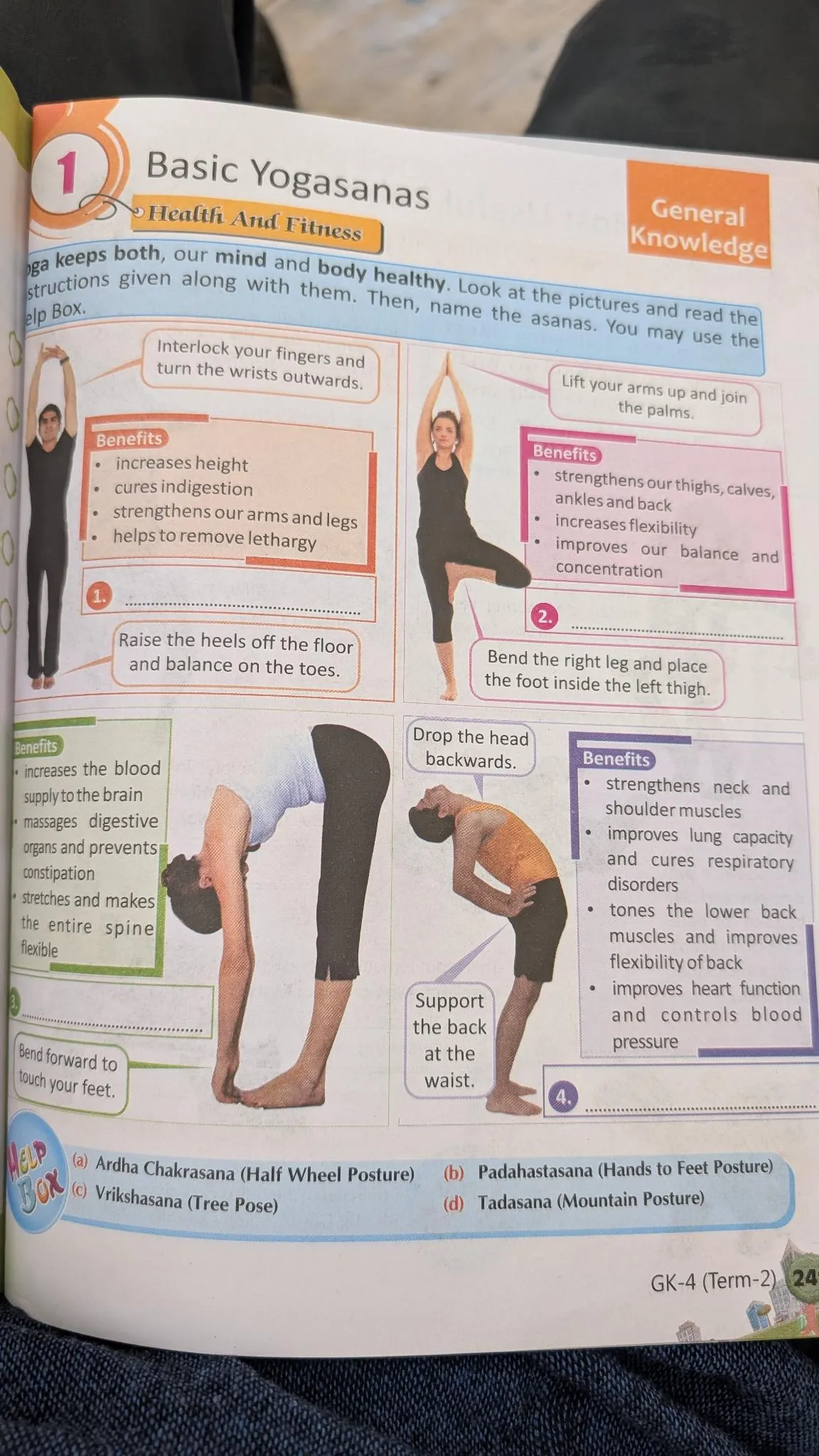
The postures many of us in the West simply call “Yoga.”
Which is funny.
Because the postures are only one part of a much larger yogic system.
But that's another rabbit hole.
For another day.
Lunch.
More food.
More silence.
More washing the plates.
And then Tsewang feels like doing something refreshing.
A bath.
In the mountain stream.
Great idea.
There is just one problem.
We need the car.
Not a car.
The car.
This thing:
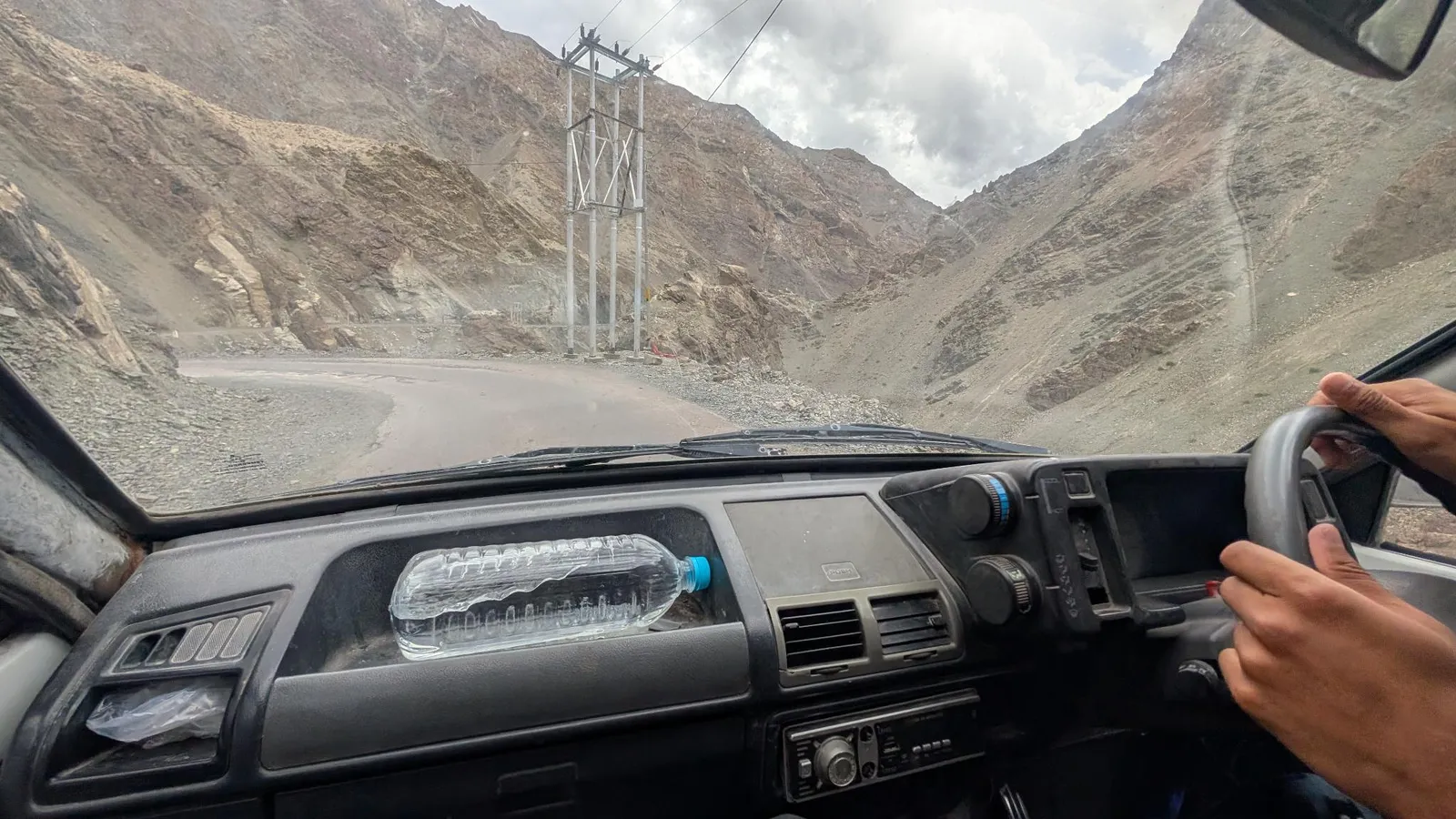
Old-school perfection.
Buttons.
Knobs.
I love it.
The road itself is actually completely fine.
The car?
Makes it feel like Kerala.
Bump.
Bump.
BUMP.
The seat behaves like a 4D cinema chair.
Forward.
Backward.
Sideways.
Vibrating.
Rotating.
In the turns I genuinely wonder whether we're about to fall over.
I don't know whether it's my German subconscious...
or simply my will to live...
but I put on my seatbelt.
After relocating every single joint in my body, we reach the stream.
Cold mountain water.
Perfect.
Except...
it's brown.
Not beautifully Himalayan crystal clear.
Brown.
We look at it.
Nope.
Back into the monk-mobile.
No mountain bath.
Normal shower.
Which, for me, isn't actually much of a downgrade.
Because remember:
Hot water?
In the guesthouse?
Still only theoretical.
It's afternoon.
And it's around 25 to 30 degrees Celsius.
I actually feel like showering now.
The water from the blue knob is kinda warm by now.
Everything is fine.
And I get access to the washing machine.
In one word:
Necessary.
Very necessary.
The waste water has the same colour as the mountain water earlier.
Deep brown.
We move back to the trees.
At some point a sound stops in the background.
I don't notice.
Tsewang does.
“The washing machine.”
Right.
Finished.
I hadn't even heard it.
Of course he had.
We hang the clothes outside.
Then return to the trees once more.
The shade has moved again.
So do we.
And slowly...
the philosophical universe opens once more.
Back Under the Tree
This time the conversation feels different.
Maybe because we've already spent what feels like years together.
Maybe because trust has grown.
Maybe because this place does that.
The morning had been about a question:
What does it mean to wake up?
Now another one appears.
Who can?
Because if enlightenment really means waking up from illusion...
who gets to do that?
Monks?
Saints?
People who have lived beautifully clean lives?
People who never made terrible mistakes?
And that's when Tsewang tells me about Milarepa.
I had heard the name.
But not really the story.
According to the traditional story, Milarepa did terrible things when he was young.
Black magic.
Revenge.
People died.
Many.
I stop him.
“Wait.”
“Yes?”
“He killed people?”
“Yes.”
“And later became enlightened?”
“Yes.”
Silence.
I look at him.
He looks back.
“Whouuuh...”
That one lands.
Hard.
A murderer.
Not somebody who forgot to meditate one morning.
Not somebody who told a lie.
A man carrying actions so heavy that most societies would permanently place him in one box:
Bad.
Evil.
Finished.
And yet in his story...
that wasn't the end.
He regretted what he had done.
Deeply.
He sought a teacher.
He practised.
Suffered.
Changed.
And became one of Tibet's most celebrated yogis.
I sit there.
Processing.
“So then...”
Tsewang waits.
“What we've done doesn't completely define what we can become.”
“Apparently.”
That is huge.
Really huge.
Not because actions suddenly don't matter.
Of course they matter.
People suffer.
Consequences exist.
Responsibility exists.
Milarepa's transformation wasn't pretending nothing had happened.
Quite the opposite.
But perhaps judgment is something different.
Perhaps saying:
You did something bad.
is not the same as saying:
You are bad.
Perhaps one describes an action.
And the other turns it into an identity.
And once again:
Illusion.
Good person.
Bad person.
Success.
Failure.
Saint.
Sinner.
One moment true.
The next?
Possibly outdated.
How many of those labels describe something permanent?
If nothing is permanent...
why should judgment be?
Apparently...
not even “murderer” has to be the final chapter.
I reach for another apricot.
“Whouuuh...”
My mind runs.
“What if everybody is simply somewhere on the way?”
“On the way to what?”
“Understanding.”
Pause.
“Enlightenment, maybe.”
He smiles.
And another uncomfortable thought arrives.
I hesitate before saying it.
“I think I need to become more egoistic.”
That gets a reaction.
He looks at me.
“Egoistic?”
“Yeah.”
Not ideal vocabulary in a Buddhist monastery.
I know.
I laugh.
“Okay. Maybe wrong word.”
He waits.
“What I mean is...”
I search.
“I spend a lot of energy trying to be good for other people.”
Family.
Friends.
Society.
Expectations.
Be reliable.
Be kind.
Don't disappoint.
Help.
Adjust.
Sacrifice.
All beautiful things.
Until they make you abandon your own path.
“If I believe there is something I'm here to do...”
I continue.
“...and I constantly give it away because somebody else expects something from me, is that really good?”
Tsewang looks at me.
I continue.
“Maybe I have to choose myself more.”
He nods.
“Your path.”
“Yes.”
“My path.”
That's closer.
Not:
Forget everyone else.
Not:
Take whatever I want.
Not:
Other people don't matter.
But:
Stop using other people's expectations as the compass for my existence.
Because maybe fulfilling what I'm here to do ultimately serves more people than permanently making myself adjust so nobody gets uncomfortable.
Milarepa does something to that thought.
The past isn't the ceiling.
The label isn't the person.
Transformation remains possible.
Taking responsibility is part of the path.
Maybe life isn't about being perfect.
Maybe this realm isn't an exam where one wrong answer disqualifies you.
Maybe we're here to experience.
Make mistakes.
Notice.
Learn.
Change.
Continue.
I don't know.
But again...
something opens.
At some point I tell Tsewang Wangchuk's reincarnation story.
You already know it.
If not:
Day 21.
I'm not telling it again.
Tsewang listens.
Thinks.
We talk about it.
That's enough.
No reincarnation rabbit hole today.
Because another story matters just as much to this conversation.
Pradeep's.
The one you already know too.
From Day 15.
The son who went out to learn everything.
Collected knowledge.
Returned convinced he knew it all.
Only for his father to ask him the one question he couldn't answer.
I don't need to retell it to you.
But I tell it to Tsewang.
Slowly.
He listens.
And when I reach the father's answer—
Yourself.
—Tsewang leans back.
Silence.
Then:
“Whouuuh...”
A full one.
Yes.
Got him.
I smile.
He stays quiet for a moment.
Then somehow we end up talking about knowledge.
And wisdom.
And he shares a cool truth:
Knowing that a tomato is a fruit is knowledge.
Not putting it into fruit salad is wisdom.
I laugh.
“Okay. That's good.”
He laughs too.
Knowledge.
Wisdom.
Not the same.
And suddenly one of our favorite words becomes:
Pointless.
Knowing something without being able to live it?
Pointless.
Repeating somebody else's realisation?
Pointless.
Collecting spiritual vocabulary so you can sound spiritual?
Very pointless.
A thousand facts.
A thousand teachings.
A thousand books.
All going through...
you.
If you don't understand that filter?
How much do you really understand?
Pradeep's story sits right in the middle of it.
Know everything.
Except yourself?
What exactly do you know?
And somewhere in there...
Tsewang says a phrase.
I write it down the way I hear it:
Atma Dipo Bhava.
He explains it to me simply:
Be your own light.
This time I don't miss it.
Wangchuk had said the same thing before.
Now it reappears.
And hits me fully.
Be your own light.
Not:
Find somebody else's light.
Not:
Copy your teacher's answer.
Not:
Worship someone who found theirs.
Your own.
Light.
Tsewang explains the point again.
In his words, roughly:
“Buddha says:
This is what I found.
But don't just believe me.
Think.
Verify.
Remember.”
“Whouuuh...”
That...
I can work with.
I think back to yesterday.
To the statues.
The colours.
The bowing.
The resistance I felt.
Maybe that's what I had been reacting to.
I hadn't come here to replace one authority with another.
I hadn't come here to become Buddhist.
I hadn't come here to learn what I was supposed to believe.
I came here...
for contrast.
To ask.
To experience.
To test.
To discover what remains true when nobody tells me what should be true.
And that's why talking with Tsewang works so beautifully.
He doesn't need me to agree.
He thinks.
I think.
He gives me something.
I give him something.
He expands my world.
I expand his.
He explores.
I explore.
Alignment.
Maybe that's why, within such a short time...
we truly mean it when we start calling each other:
Brother.
The Rest of the Day
Eventually the deep conversation dissolves into ordinary life again.
My clothes flap outside.
Dawa appears.
Disappears.
Appears again.
And by late afternoon, one thing is clear:
This is my last full day here.
Which creates one boring but necessary question:
How do I get back to Leh tomorrow?
Bus?
Lift?
Walk somewhere first?
Figure it out in the morning?
I ask Tsewang.
And naturally...
because apparently this is simply how my life works in Ladakh now...
he says:
“I have to go to Leh tomorrow too.”
I shake my head.
“Really?”
“Yes. I have a dentist appointment. Why?”
Again.
Synchronicity.
Melroy wanting to go for a ride.
Wangtak needing to return to Leh.
Wangchuk going towards Khaltse.
Angmo needing to go to work.
The lifts where I joined the existing flow instead of creating new waves.
And now Tsewang.
I don't force it.
I don't arrange much.
I move.
And life seems to keep answering:
Here.
Take this.
Go with them.
Why make your life hard?
He opens up:
“We can try to take a lift.
Or just take the bus.
It leaves at around 9:30.
We can take the car to go down.”
“Then breakfast at 8:30?”
“Okay.”
Dawa at Night
After dinner, Tsewang shows me pictures of the stars.
Stars.
The Milky Way.
Super clear.
Right.
Why have I not thought of that?
I'm in the Himalayas.
At the top of the world.
In the middle of almost nowhere.
Very little artificial light.
And I have been going to bed every night without properly looking up.
Probably because I'm destroyed by the end of every day.
Fair enough.
But it's not dark enough yet.
And before it is...
Dawa pulls me into his room.
Movie time.
There's a TV in the bedroom.
With Wi-Fi.
Another surprise.
Monastery life keeps refusing to match the monastery life in my head.
Dawa and I play-fight for a bit.
Then start watching.
He moves closer.
And closer.
Until he is fully leaning against my shoulder.
Then he takes my arm.
Moves it.
Places it around himself.
I let him.
And something about that little gesture gets me.
I don't know exactly what he feels.
I can't.
But I wonder what it's like to be such a young lama here.
In this incredibly peaceful...
but incredibly isolated...
place...
As a six-year-old?
Maybe sometimes a bigger brother feels nice.
So for a while...
that's what I am.
Tsewang enters.
Apparently they share the room.
Two beds.
One TV.
Movie time ends.
We make plans for tomorrow.
Then I leave.
Back towards the guesthouse.
But...
not into my room.
Tonight?
No.
The day has one final highlight.
Or...
nightlight?
Darkness
I walk away from the monastery.
Away from the buildings.
Into the darkness.
It is slightly spooky.
Very spooky, actually.
Every step takes me farther from the light.
The earth becomes darker.
And the sky...
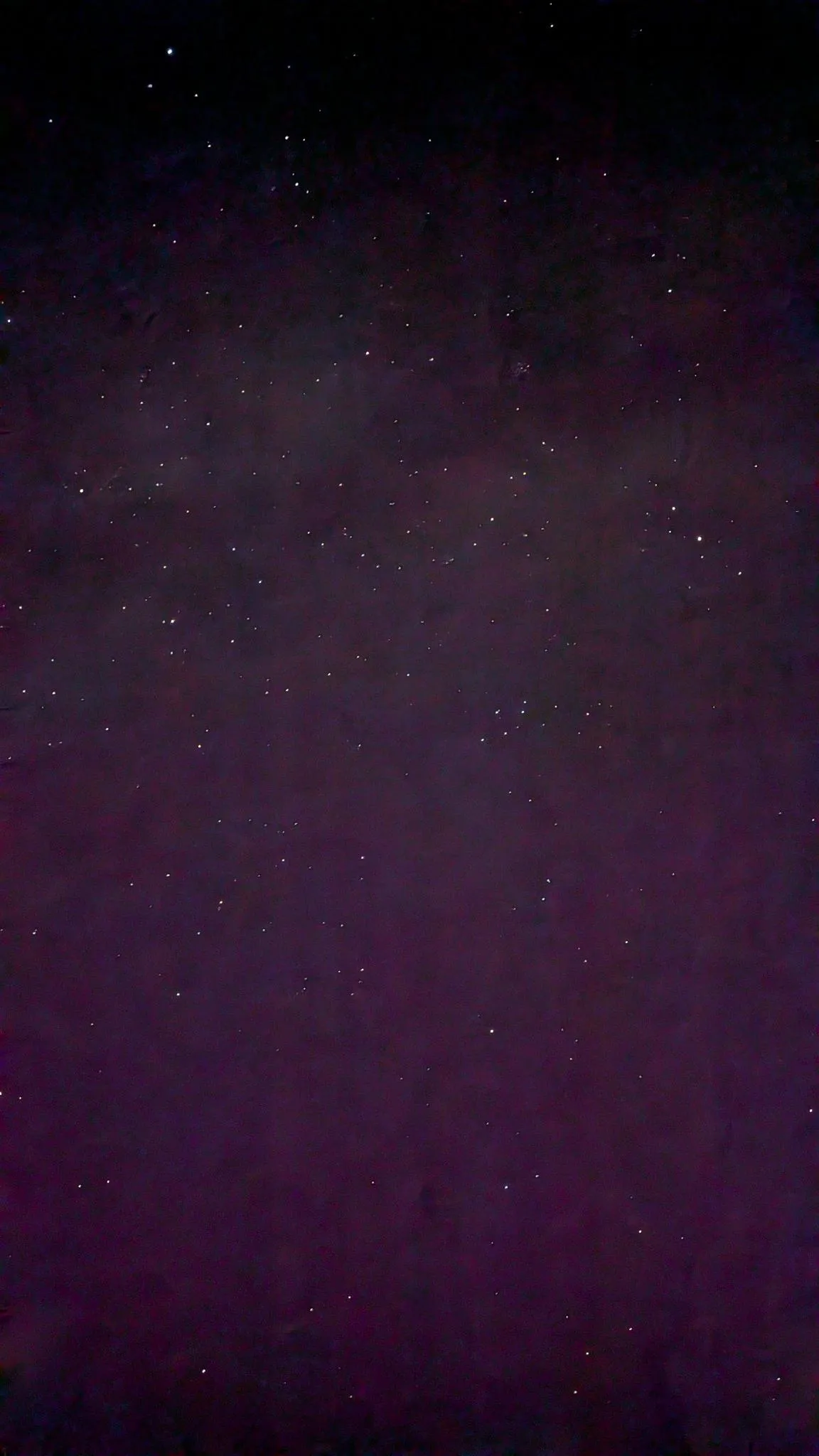
brighter.
One star.
Ten.
Hundreds.
Thousands.
More appear the longer I lie there.
My eyes adjust.
The monastery disappears behind me.
The mountains become black shapes.
The world below loses detail.
And above me...
more and more becomes visible.
The Milky Way should be somewhere there.
Maybe I see it.
Maybe I don't.
I don't know.
For once...
I don't need to.
I just lie there.
On the road.
Looking up.
Marveling.
After everything we talked about today, one question appears.
Is this really only an illusion?
If so...
I gotta admit.
It's a damn pretty one.
Be Your Own Light