Before I started writing this one, I thought:
"This is gonna be a quick one."
And then I remembered:
It won't be.
Not if I want to pay proper respect to what I heard, saw, and experienced that day.
I have to take my time.
Because this is another gate into the mysteries of being more.
The mysteries of being Hunam.
Mysteries I'd like to explore together with you.
And when a day like that happens, all you can really do is stand there in awe.
I already told you.
I felt something was coming.
After a day that had been completely nuts.
After a day during which I already had the feeling that something big was waiting for me.
After a day in which I had pushed beyond my physical limits through sheer will.
But I didn't know that what came next would introduce a theme, an insight, and a mystery that would follow me through my entire Ladakh journey.
I exhausted my body. And opened the spiritual gate of the journey.
It all started over breakfast with Wangchuk.
The son of the house.
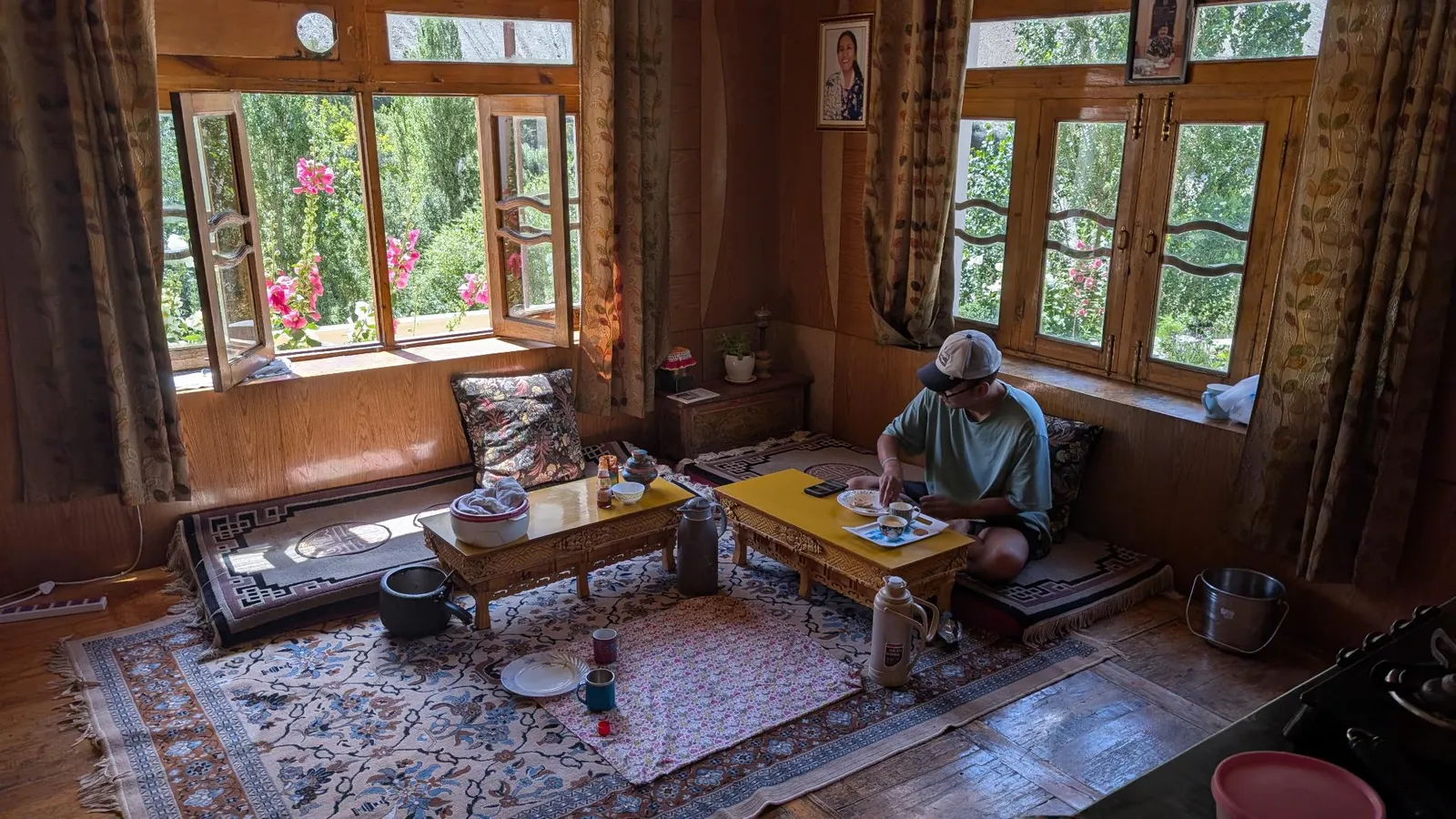
Cozy, isn't it?
He asked me a simple question:
"What is your plan for the day?"
I replied:
"I gotta take it slow. Yesterday was a crazy day. And I need to write."
He continued at his own pace, hardly reacting to what I had just said.
What mattered was what he had to say.
"You should go see Temisgam Palace. There is a statue of a deity. If you don't go there, everyone will ask you how you could possibly have missed it."
At the time, I simply heard him.
I didn't yet understand how important this deity was in Ladakh.
Later, I would encounter references to it almost everywhere I went.
Avalokiteshvara
We talked quite a bit about it.
From Wangchuk, I began learning about the role of deities and devotional practices within different Buddhist traditions. He contrasted this with what he understood as the more strictly philosophical side of Buddha's teachings.
So I asked him:
"Do you believe in it?"
Here is his answer.
He told me about an important event during his father's service.
A VIP was supposed to visit.
Everything had been arranged.
Decorations.
Preparations.
The whole program.
And then came the rain.
Not normal rain.
Huge rain.
Heavy rain.
The kind of rain that starts destroying everything you prepared.
His father prayed to Avalokiteshvara, whose statue was also installed in their homestay.
There was, Wangchuk explained, a procedure.
A Puja.
Prayers from Tibetan scripture.
And then, according to the story, within five or ten minutes the rain stopped completely.
Not a single drop.
The program took place.
The VIP left.
And then—
BAAANG.
The rain returned.
Wangchuk laughed.
"So many examples are there, okay? So I also have a little faith in the deity."
Then he added something that interested me even more:
"But originally, Buddha doesn't promote those things. Buddha's teaching is very logical. No deity, no nothing."
And then came the sentence I almost completely overheard at the time:
"You gotta be your own light."
He told me another story.
Their cow had disappeared.
It hadn't returned home for two days.
So, according to his grandfather, you could pray to the deity:
At least give us a hint.
Show us where the cow is.
And then, Wangchuk said, either a hint would come—
or somehow the cow itself would return.
"I don't know how true it is, you know. At least my grandpa used to tell that all the time. In that way, the deity can prove useful."
The Force
Stories like that exist all around the world.
Different cultures.
Different religions.
Different spirits, gods, saints, deities, ancestors, supreme powers.
The external figure changes.
But something remains remarkably similar:
The person praying.
And that made me think.
If the external helper changes from culture to culture, but the inner procedure often looks surprisingly similar, isn't that interesting?
Faith.
Intention.
Knowing what you are asking for.
Immersing yourself in the feeling that what you seek is already possible.
Trusting.
Sometimes completely.
Again and again, I had encountered variations of this idea in very different traditions.
Jesus.
The Essenes.
Shamans.
Mystics.
Meditative traditions.
I had already written an entire book exploring that question.
So another question naturally arose:
What if the power isn't entirely outside of us?
What if external symbols, deities, rituals, and stories help us access something within ourselves?
What if they help us believe strongly enough?
Because we humans are incredibly good at making ourselves smaller than we are.
Humility is admirable.
But there's another side to it.
Try saying:
"I know I'm great."
How does that sound?
Arrogant.
Narcissistic.
Wrong, somehow.
We've built cultures in which making ourselves smaller can sound virtuous, while greatness is comfortably projected onto everything except ourselves.
But what if some of the power we search for outside ourselves also exists within?
What if symbols help us channel something we have forgotten how to access directly?
What if we have forgotten what we are capable of?
I don't know.
That's the interesting part.
Because one thing keeps appearing in all these stories:
us.
So I keep asking:
What if the common force behind at least some of these experiences is also in us?
During my search for an answer, I had already stumbled across many small pieces of the puzzle pointing in that direction.
Not proof.
Pieces.
Patterns.
Questions.
Enough to keep exploring.
And if you want to explore something like this, the first thing you have to expand is your sense of what might be possible.
Not believe everything.
Not abandon reason.
Just expand the frame a little.
Become sensitive to the mystery hiding inside ordinary life.
Because there probably won't be a message popping up saying:
LOOK THERE. SOMETHING MAGICAL JUST HAPPENED.
No level-up animation.
No narrator explaining what it meant.
No one standing beside you pointing at the important moment.
Our antennas have to become sensitive first.
The Mantra
Wangchuk sent me to the statue.
And before I left, he gave me something else.
The mantra of Avalokiteshvara.
I downloaded it.
And tried to memorize it on the way to Temisgam Palace.
Where, if I was lucky, a monk might welcome me.
It was about an hour's walk.
One thing, though, if you want to explore Ladakh:
You gotta like mountains.
And you gotta like climbing them.
See the red building at the top?
That's where I had to go.
Or so I believed.
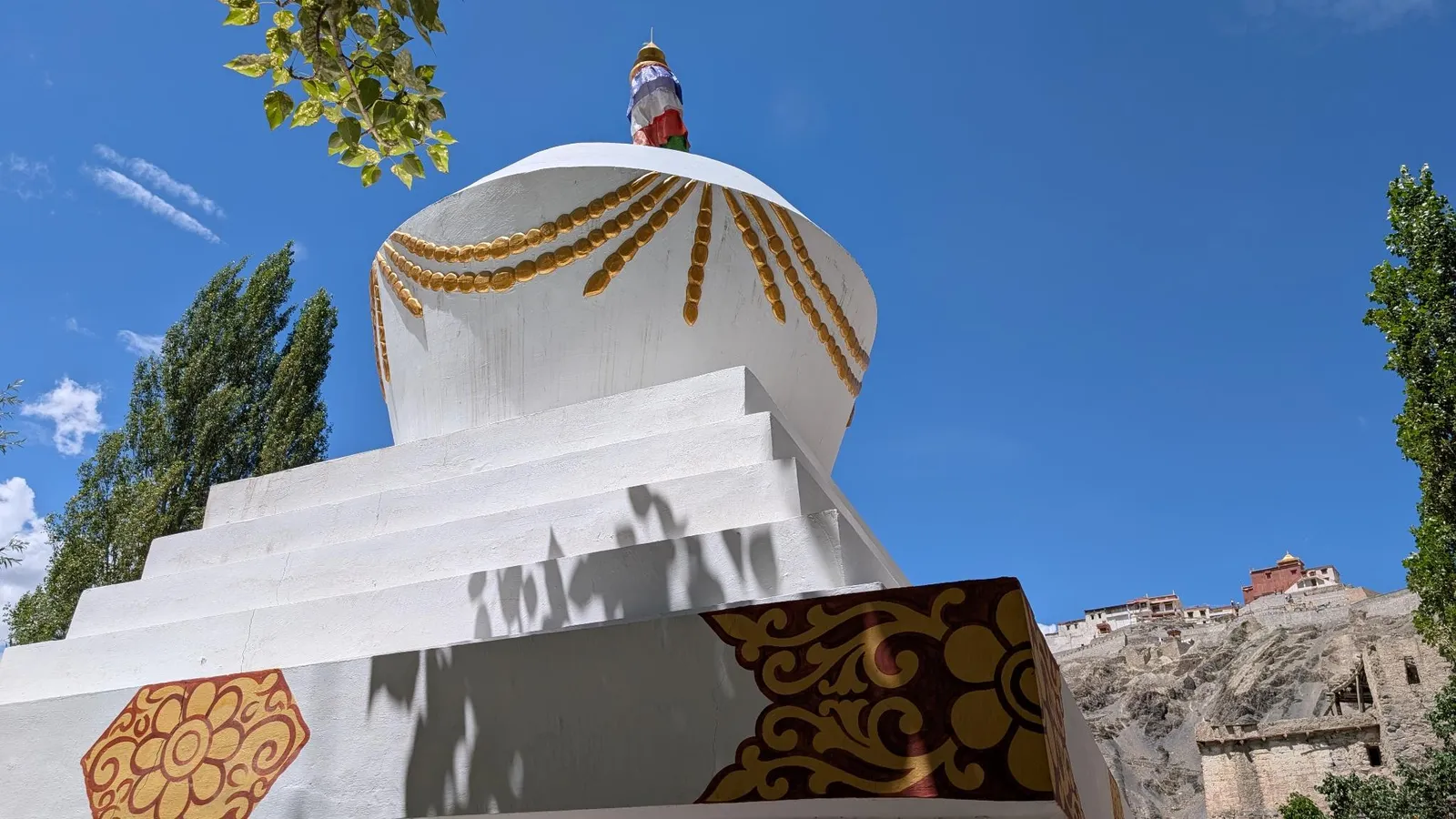
I could still feel yesterday in my entire body.
But without the backpack, it was manageable.
More like a post-workout recovery session.
And as you can see:
It was steep.
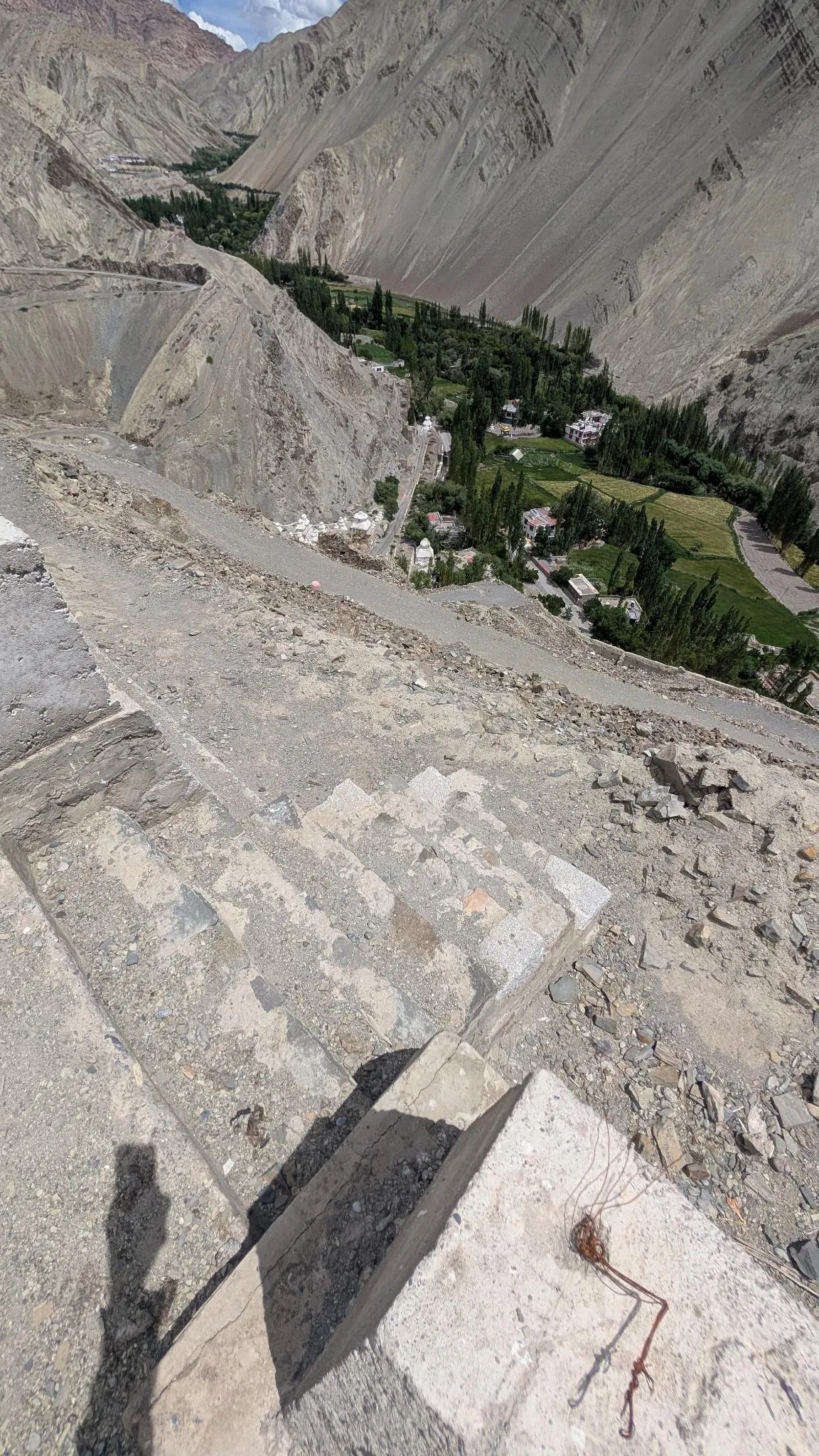
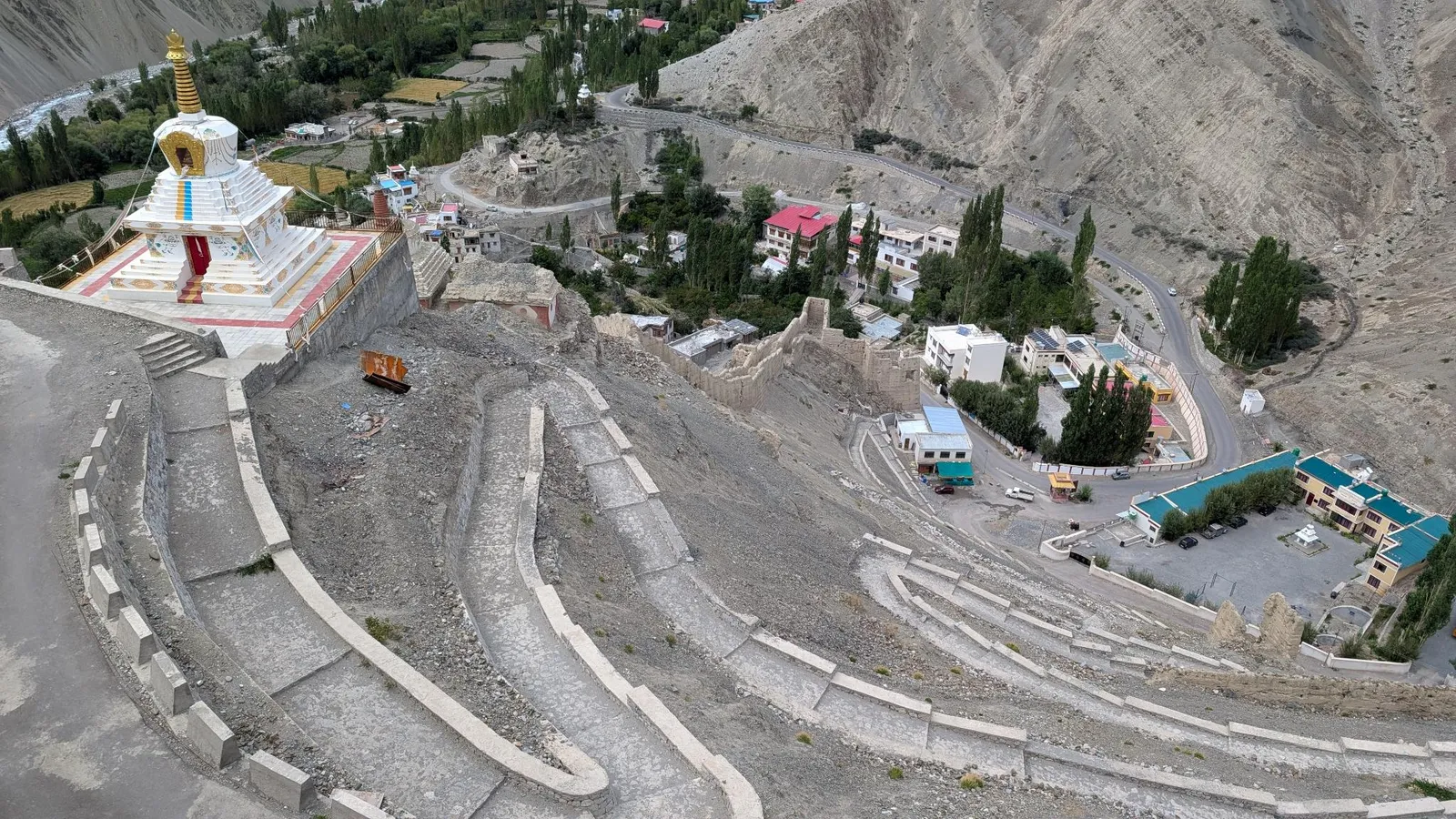
The top, though?
Rewarding.
Almost as if the place itself wanted to tell us:
All the ways lead inside.
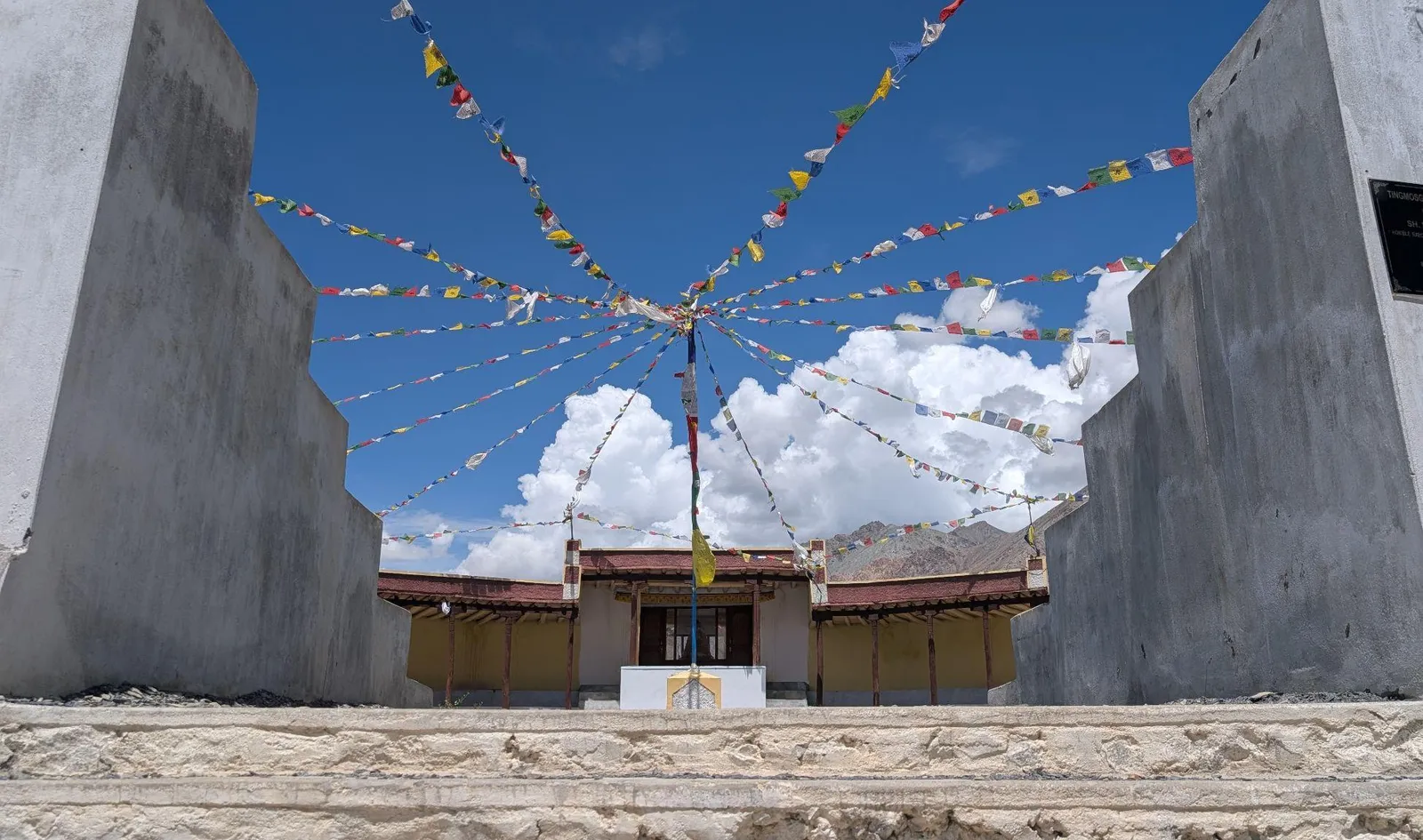
I was just flowing freely.
And, as it turned out, not even walking toward the red building.
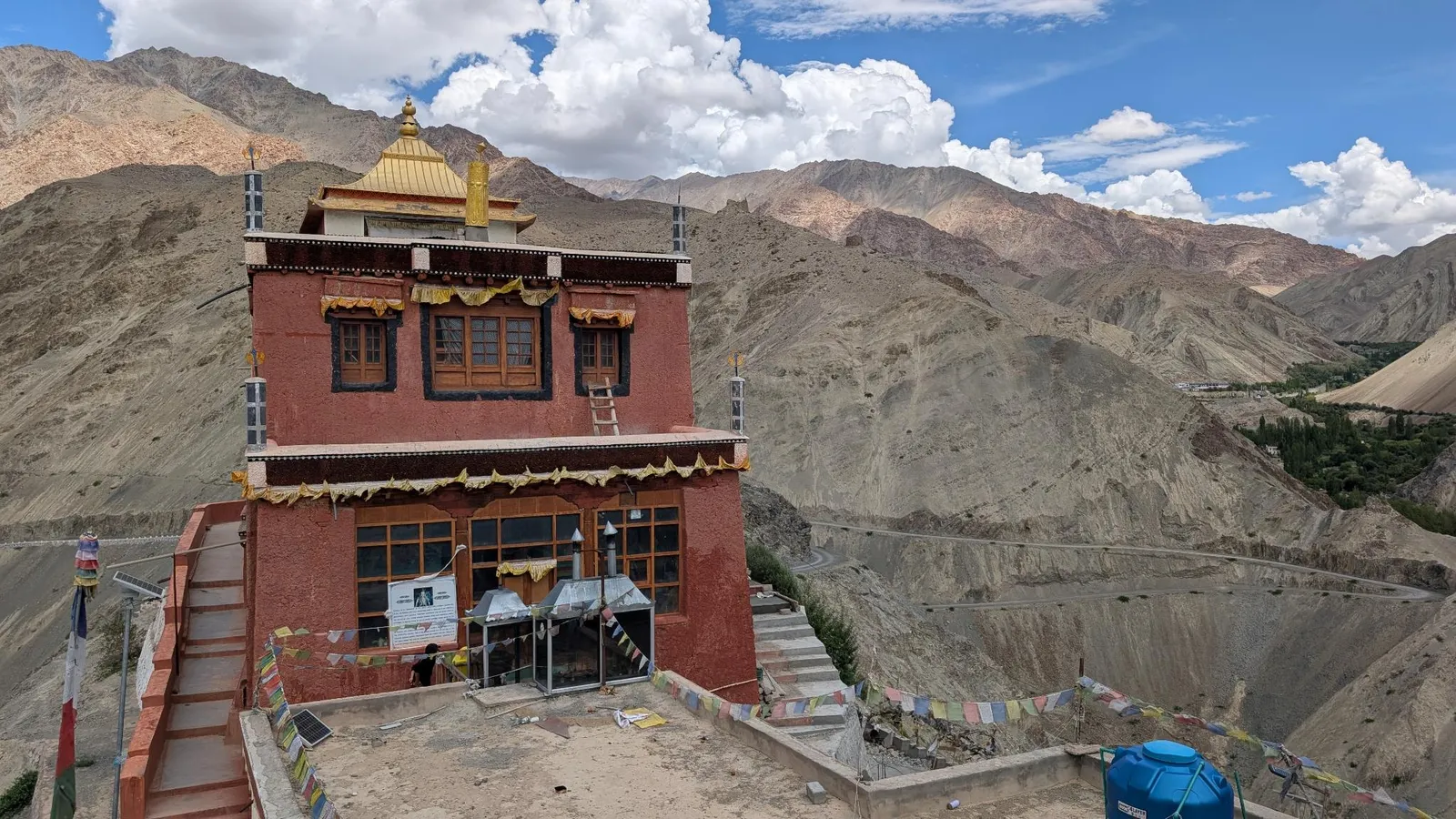
Instead, I ended up here, on its opposite:
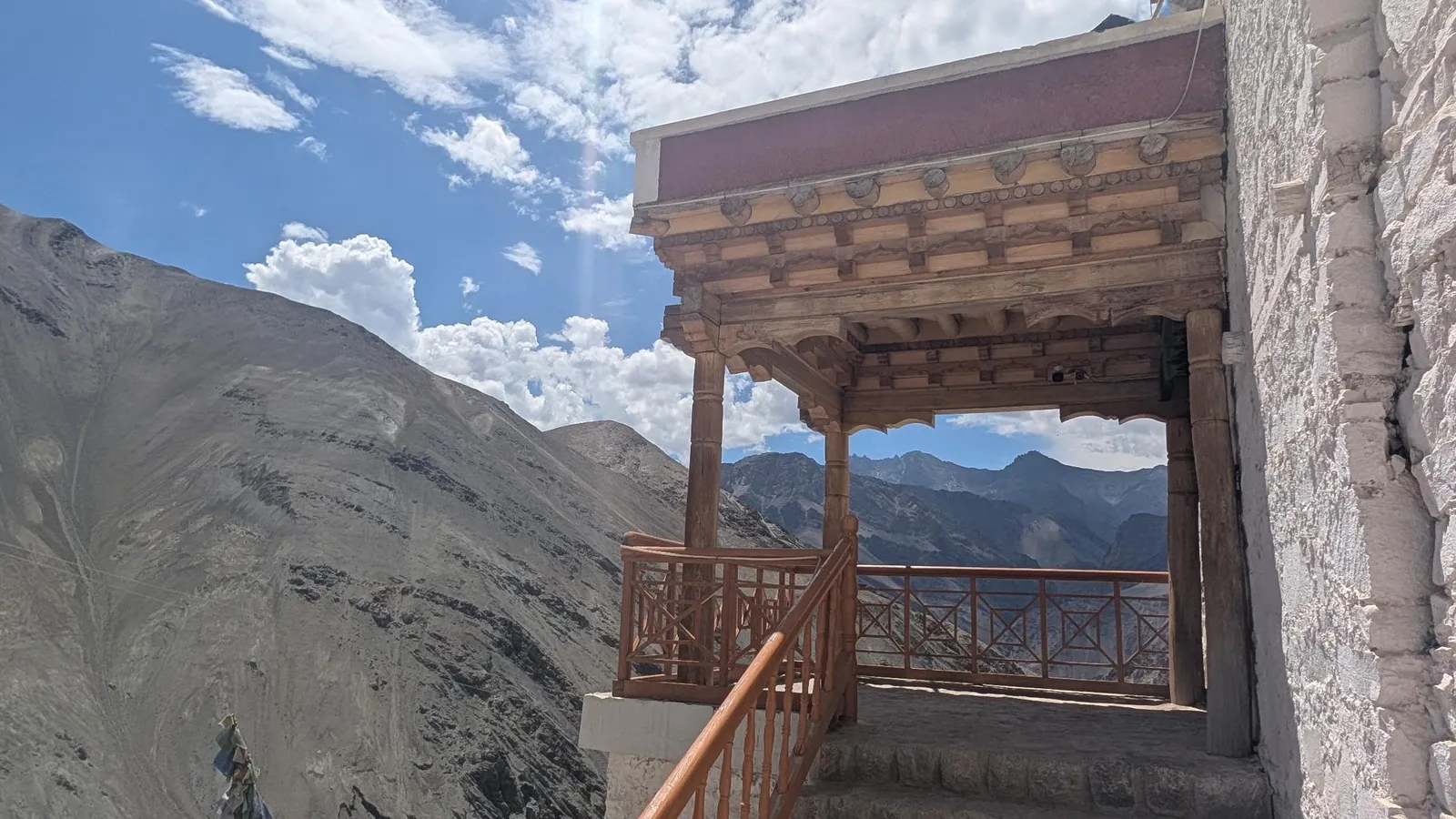
Or, seen from the inside looking out:
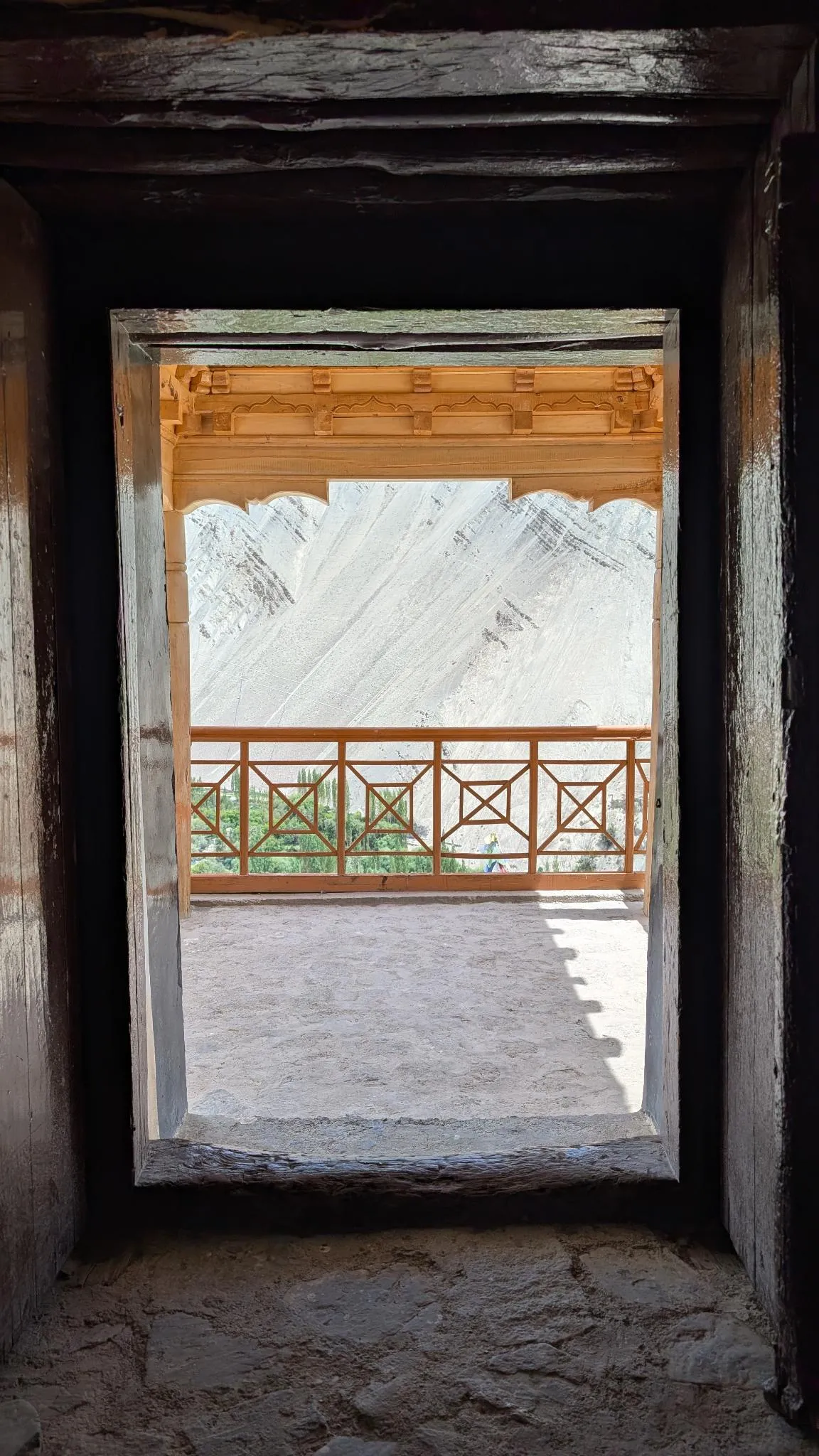
Then I turned a corner.
And what did I find?
A monk.
Who didn't speak English.
I didn't speak Tibetan.
Wonderful.
Behind him, I saw a description of Avalokiteshvara.
"Supposed to be self-risen."
"The deity of compassion."
Compassion—one of the great paths toward enlightenment in Buddhism.
The courtyard was beautiful.
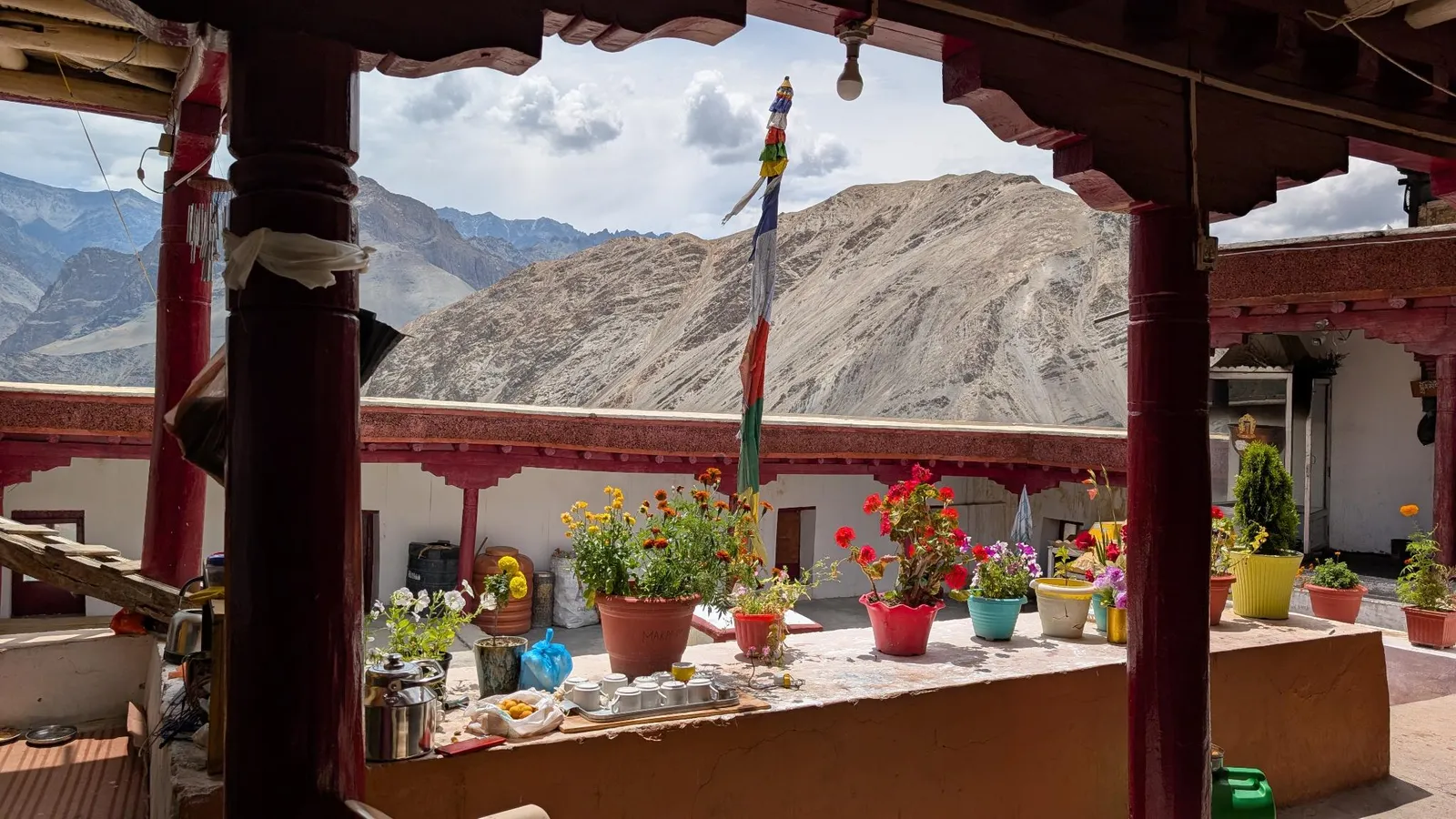
The shrine was colorful.
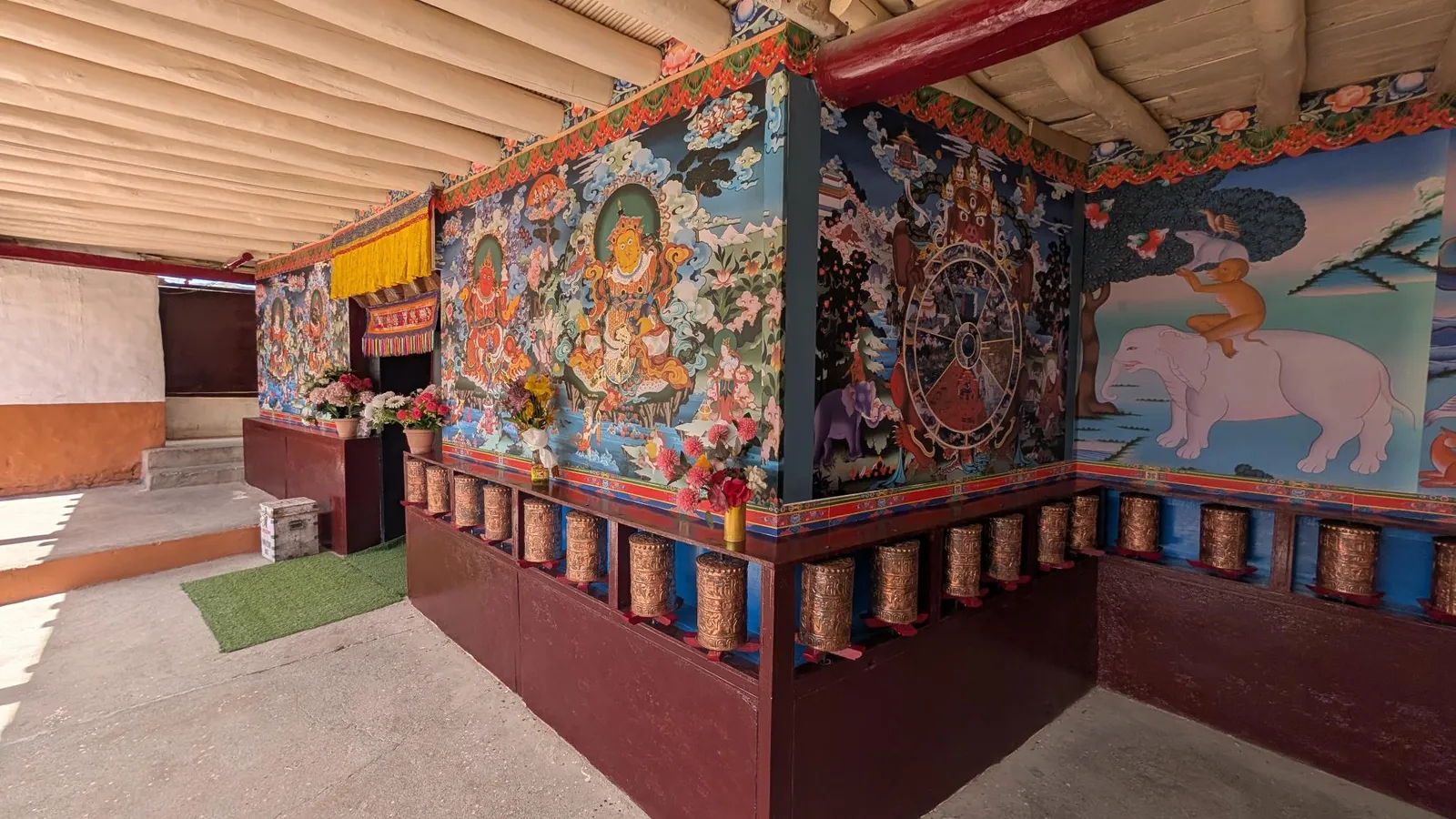
But it was locked.
He opened it for me.
And the statue?
Not there.
Inside were Buddha figures and other statues.
When we left the shrine, I asked:
"Avalokiteshvara?"
He pointed in the same direction.
I said:
"No. Not inside, right?"
He looked at me.
Really looked at me.
Then said:
"Come."
And off we went.
Almost through a maze.
Behind that shrine.
Around another.
Until we reached a tiny, unassuming door.
Locked again.
He opened it.
We entered.
And there it was.
The statue.
Inside, I pleasantly surprised the Lama—the monk—by chanting the mantra Wangchuk had taught me.
He joined in.
We stayed there for around thirty minutes.
Then we left together.
Personally, I didn't feel anything supernatural.
And that itself was interesting.
To me, the place felt special partly because people had poured so much attention, devotion, ritual, and meaning into it.
Maybe that is part of what makes sacred places sacred.
Still, I felt honored to be allowed inside.
To see it.
To sit there.
To connect with it in my own way.
Afterward, Jalsan—the monk—invited me for biscuits and tea in the courtyard.
We talked without understanding each other.
Somehow that worked.
Then he said:
"Come."
Again.
This time he pointed at containers of butter, golden lamp holders, and a few other things.
I understood.
He carries half.
I carry half.
Then he led me into a dark room.
A beautiful room.
A mysterious room.
Hundreds of butter lamps were burning inside.
And apparently, it was our turn to light some more.
I felt as though I was doing something important, so at every step I kept checking with him that I was doing it correctly.
For me, the whole thing felt almost holy.
When we left, I thanked him.
I pointed toward the room.
"Special."
He nodded.
Then pointed through me toward the room.
"Yes. Special!"
I moved out of the way. Pointed toward the room again.
"Reaaally special."
He pointed again. Still at me.
"Yes. Special!"
Ah.
I understood.
We had become friends.
Or brothers.
Or whatever.
That deserved a selfie.
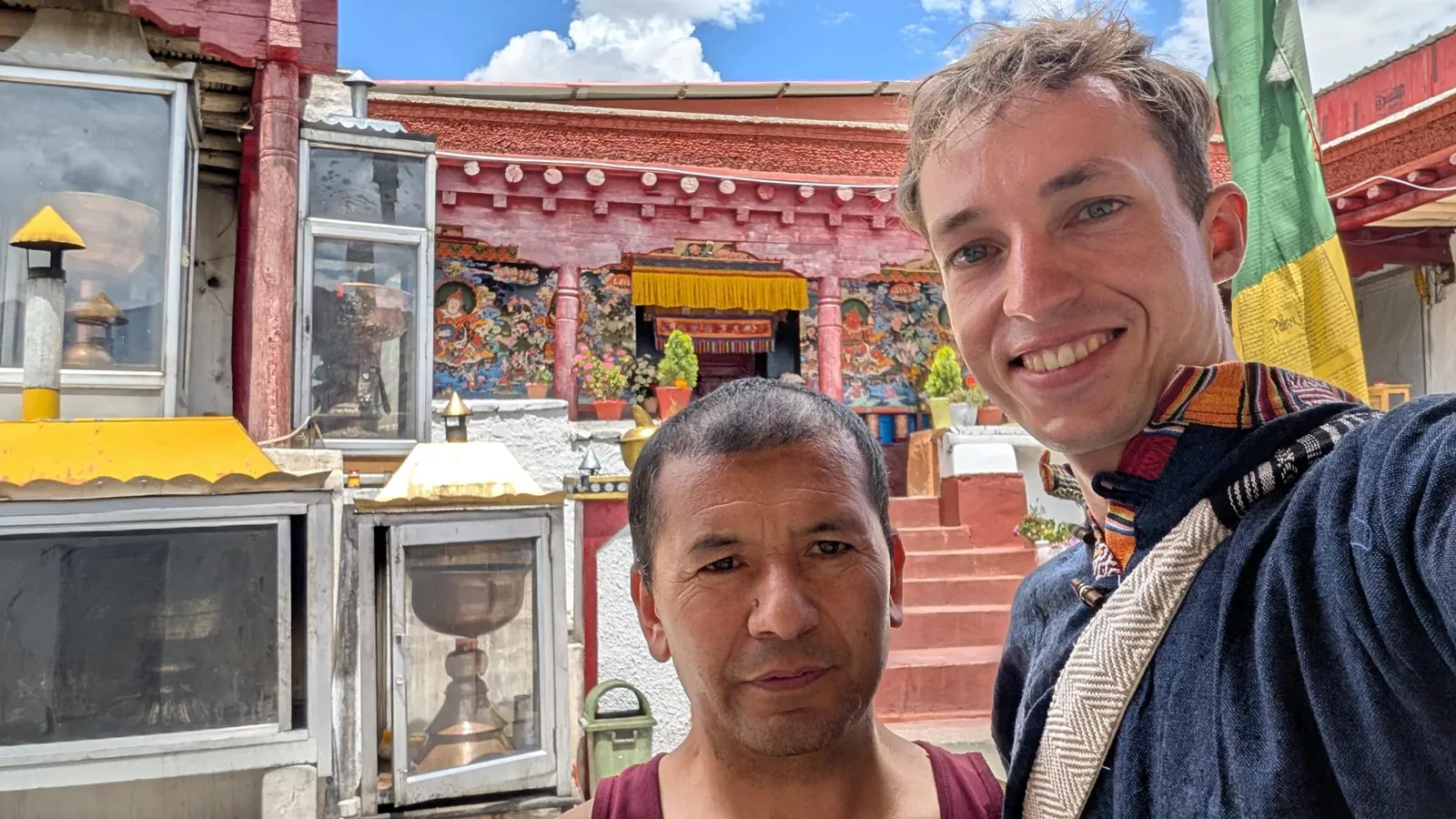
That was cool.
But I still hadn't understood how important Avalokiteshvara would become during the rest of my journey.
Later I encountered the mantra again in connection with medicine blessed during teachings by the Dalai Lama.
Later I would also begin connecting Avalokiteshvara with the mantra that seemed to be carved, written, painted, spun, and whispered everywhere around me:
Om Mani Padme Hum.
Up to this point?
Pretty normal stuff.
What follows isn't.
Brace yourself.
Wangchuk's Story
You've probably heard of reincarnation.
The idea that life does not simply end with the death of one body.
That something continues.
That consciousness, soul, or some other part of us can somehow enter another life.
I had always associated the idea mainly with Hinduism and Buddhism, although ideas about continuing life, rebirth, or the return of souls appear in many different traditions and cultures. Christianity, Islam, etc.
In Tibetan Buddhism, however, reincarnation becomes particularly visible.
Why?
It plays a role in recognizing certain religious leaders.
Instead of simply electing a successor, traditions surrounding reincarnated teachers may involve searching for a child believed to carry the continuation of the previous person's consciousness.
Stories often include children recognizing belongings, people, or places connected with the deceased.
Sounds strange?
Potentially manipulatable?
Absolutely.
Which is exactly why Wangchuk's story fascinated me.
Because this wasn't some ancient legend.
It wasn't something I had read in a book.
He was sitting right in front of me.
And according to his family and village, he himself was believed to be the reincarnation of an old woman from the same valley.
Here is the story he told me.
When Wangchuk was around four or five years old, he apparently began telling his father that his real home wasn't the house where he was living.
His home, he insisted, was in another part of the village called Turtuk Pa.
An old woman from that family had died about a year before Wangchuk was born.
According to the villagers, Wangchuk might have been her reincarnation.
At first, of course, he was simply a child saying strange things.
But then the stories became more specific.
The deceased woman's family invited him to their home.
They placed a selection of beads in front of him.
Ten.
Maybe fifteen.
And asked:
"Which one is yours?"
The idea was simple.
If he really carried memories from the old woman's life, perhaps he would recognize something that had belonged to her.
Wangchuk chose one.
The correct one.
That changed things.
"Then they started believing me," he told me.
He explained that stories like this weren't considered especially unusual in the village.
According to him, many families had similar stories.
The crucial period was early childhood. Four. Five years old. Before, as Wangchuk described it, the mind becomes crowded with responsibilities, obligations, and everything else life puts into it.
He himself no longer remembers the events clearly.
Most of what he knows today was retold to him by his father.
One of the first stories involved his grandmother bathing him.
She apparently said something like:
"Oh, you're such a good boy. Keep yourself clean every day."
And little Wangchuk replied:
"No, no. I'm not your good boy. I'm so-and-so's boy."
His grandmother froze.
What was he talking about?
Who was this person?
His own family belonged to Skarat Pa.
The other family—to which the deceased woman had belonged—was Turtuk Pa.
And little Wangchuk apparently kept insisting:
"No, no. I don't belong here. I belong to Turtuk Pa."
His grandmother was shocked.
He was only a small child. He hadn't yet set actual footsteps outside their own gate.
So how did he know the name?
At first, they ignored it.
Just a child saying things.
But then more "symptoms," as Wangchuk called them, began appearing.
He started saying the name of the deceased woman's son.
He would apparently speak to him as though he knew him.
Then, during a village function, Wangchuk said:
"My home is that way. I know the way."
That got his father's attention.
He asked some of the elders what they thought.
Their response was basically:
This is strange.
Let's not tell him anything.
Just let the child walk.
See where he goes.
So they did.
Four-year-old Wangchuk started walking.
And, according to the story, led them directly along the route to the other family's home.
Once there, he began talking about details from the household.
"We had two oxen."
"We had three cows."
"Where are they?"
And according to the family—
the numbers matched.
Then came the beads.
Once he correctly identified the item believed to have belonged to the dead woman, the family became convinced.
They hugged him.
Loved him.
Gave him money.
Celebrated.
And today, Wangchuk told me, the deceased woman's eldest son still occasionally visits him.
Which creates a rather wonderful sentence:
The man is older than Wangchuk.
But according to the reincarnation story...
he is also Wangchuk's son.
Because Wangchuk had supposedly been his mother in a previous life.
Sometimes the man even gives him pocket money.
Wangchuk laughed when he told me that.
Then I asked him something.
"Do you believe we can choose the family we're born into?"
And that opened another part of the story.
Wangchuk told me that people in the village had once asked a respected Buddhist religious teacher why so many people who died there seemed, according to local stories, to be reborn in the same village.
The answer they received was connected to Avalokiteshvara.
Again.
The same deity Wangchuk had sent me to visit that morning.
Avalokiteshvara—the deity of compassion.
According to Wangchuk, the entire village had immense faith in him.
Good situation?
Avalokiteshvara, help us.
Bad situation?
Avalokiteshvara, save us.
Before death, many people would naturally turn toward the same object of devotion.
Maybe they prayed for a peaceful death.
Maybe for rebirth.
Maybe for something else entirely.
Wangchuk didn't know.
But the suggestion was that this intense shared devotion might somehow draw consciousness back toward the same place.
The same valley.
Sometimes, people even believed, into a better family.
I just sat there listening.
Because what do you say to a story like that?
You can explain it away.
You can believe it completely.
You can find psychological explanations.
Cultural explanations.
Memory explanations.
Spiritual explanations.
Coincidence.
Family storytelling.
Suggestion.
Reincarnation.
I don't know.
And I think that's exactly why the story stayed with me.
Because Wangchuk himself didn't present it like a preacher trying to convince me.
Quite the opposite.
Again and again he said:
"I don't remember personally."
"My father told me."
"That's what people believe."
He seemed almost amused by his own story.
And somehow that made it more fascinating.
Not proof.
Not a conclusion.
Just another strange little crack in the wall of what I thought reality looked like.
That is wild.
Later, we picked apricots.
As usual.
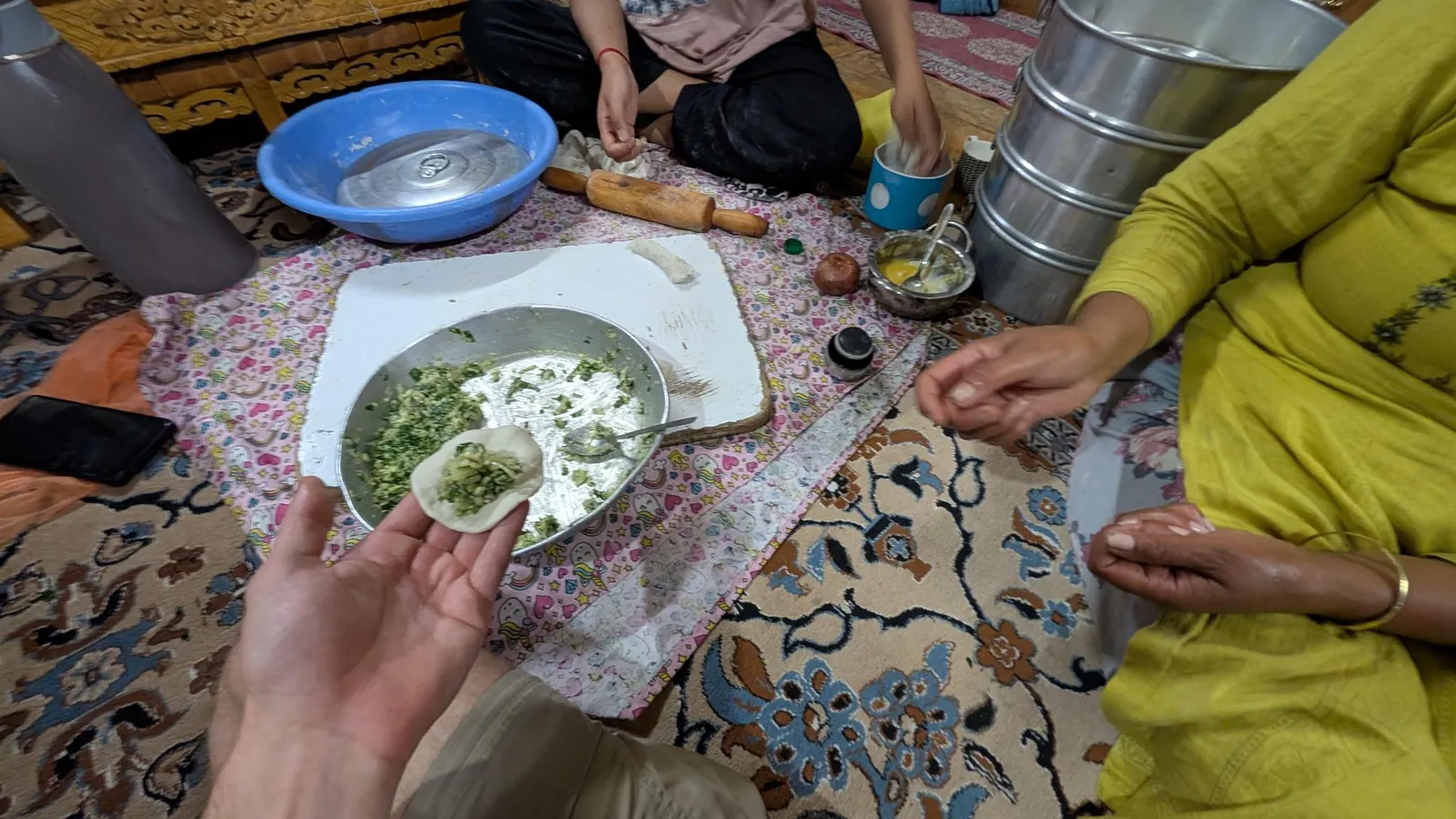
I helped make Momos.
For the first time.
Embarrassing.
And then I went to bed early.
Food for thought.
Be Human, the Rest follows.