No Matter What You Believe to Be True... You Are Right
Today is an inspiring day.
Those days don't happen all the time.
Days that remind us we're more.
More than the answers we're taught.
More than the pressure to get good grades.
More than the stress at work.
More than getting a nice car.
More than needing a nice house.
More than the construct we've built around ourselves.
And even more than that:
More than our perception of what is possible.
More than our perception of what is real.
The keyword is:
Perception.
I once heard a successful coach say that the brain can imagine only a little beyond what it currently accepts as plausible. Whether that number is 20%, 30%, 10%, or complete nonsense doesn't matter much to me.
The idea behind it does.
Expansion rarely happens all at once.
Most of the time, we move little by little. Our perception widens. Something that once sounded impossible starts sounding strange but conceivable. Then, eventually, normal.
And every now and then there is a moment that simply blows a hole into the wall.
The palm leaf topic might be one of those things for some people.
For others it might sound completely ridiculous.
And even if you can imagine that something like this exists, you might still think:
Okay. But how does this help me in my life?
Fair point.
This topic is not for everyone.
Some will continue reading.
Some will drop out.
So be it.
What fascinates me is how many of us seem to know exactly what is right for ourselves, and often even more confidently what is right for everyone else, while knowing surprisingly little about what we actually are.
So let me ask:
How can we know what is best for a human being if we barely explore what it means to be human?
Maybe that is one of our greatest blind spots.
We learn how to function.
How to work.
How to earn.
How to behave.
How to fit into the systems around us.
And of course, much of that is necessary.
Every culture creates ways of surviving. Values, beliefs, expectations, traditions. Move somewhere else and suddenly many of those things change.
What was obvious becomes strange.
What was strange becomes obvious.
But beneath all of those bubbles there is something we share:
Our humanness.
Our biology.
Our consciousness.
Our capacity to learn.
To create.
To connect.
To imagine.
To explore.
And that is what fascinates me.
Not because I think I have the answers.
Quite the opposite.
We cannot appreciate what we don't know.
And we cannot know what we don't know.
Maybe the mystery is infinite.
Maybe that is exactly what scares us.
It is much more comfortable to build a box, define its borders, understand the rules inside it, and then declare ourselves masters of the box.
But life is bigger than the box.
Nature is bigger than the box.
And I suspect we are too.
Maybe knowing that doesn't immediately make you more successful in the system we currently live in.
Maybe it does the opposite.
Maybe it makes life slightly more uncomfortable because narrow definitions stop satisfying you.
Maybe you start asking annoying questions.
Like:
Can't we do better?
Can't we create systems where people spend less of their lives doing work they hate simply because they need to survive?
Can't we solve problems instead of keeping them alive because somebody profits from them?
Can't we build lives that make illness less likely instead of becoming experts at managing the consequences?
Can't humanity function a little less...
and live a little more?
I don't know all the answers.
But I believe asking the questions matters.
And if we want to build something better, looking backward can be just as useful as looking forward.
Which brings me to things like palm leaf libraries.
For some, this will simply be a strange story from India.
For others, maybe it adds a little mystery back into life.
Both are fine.
Personally, I didn't go there because I desperately wanted to know my future.
I went because I wanted to see something that didn't fit neatly into my existing understanding of reality.
I wanted to be surprised.
Maybe even mind-blown.
And after all of that introduction...
here's what actually happened.
Inner Cleansing
Prabhu woke me up at 8 AM.
I could definitely feel my cold, but I had slept surprisingly well sharing the room with Dinesh.
The only challenge was temperature diplomacy.
I wanted the room warmer, which meant making it very clear that I did not want the AC running and also did not want the fan spinning at helicopter speed.
Dinesh managed to find the perfect balance.
Respect.
I still don't understand how so many people sleep peacefully under roaring ceiling fans. Those things are loud.
But then again, if you grow up with that sound, maybe silence feels strange.
Anyways.
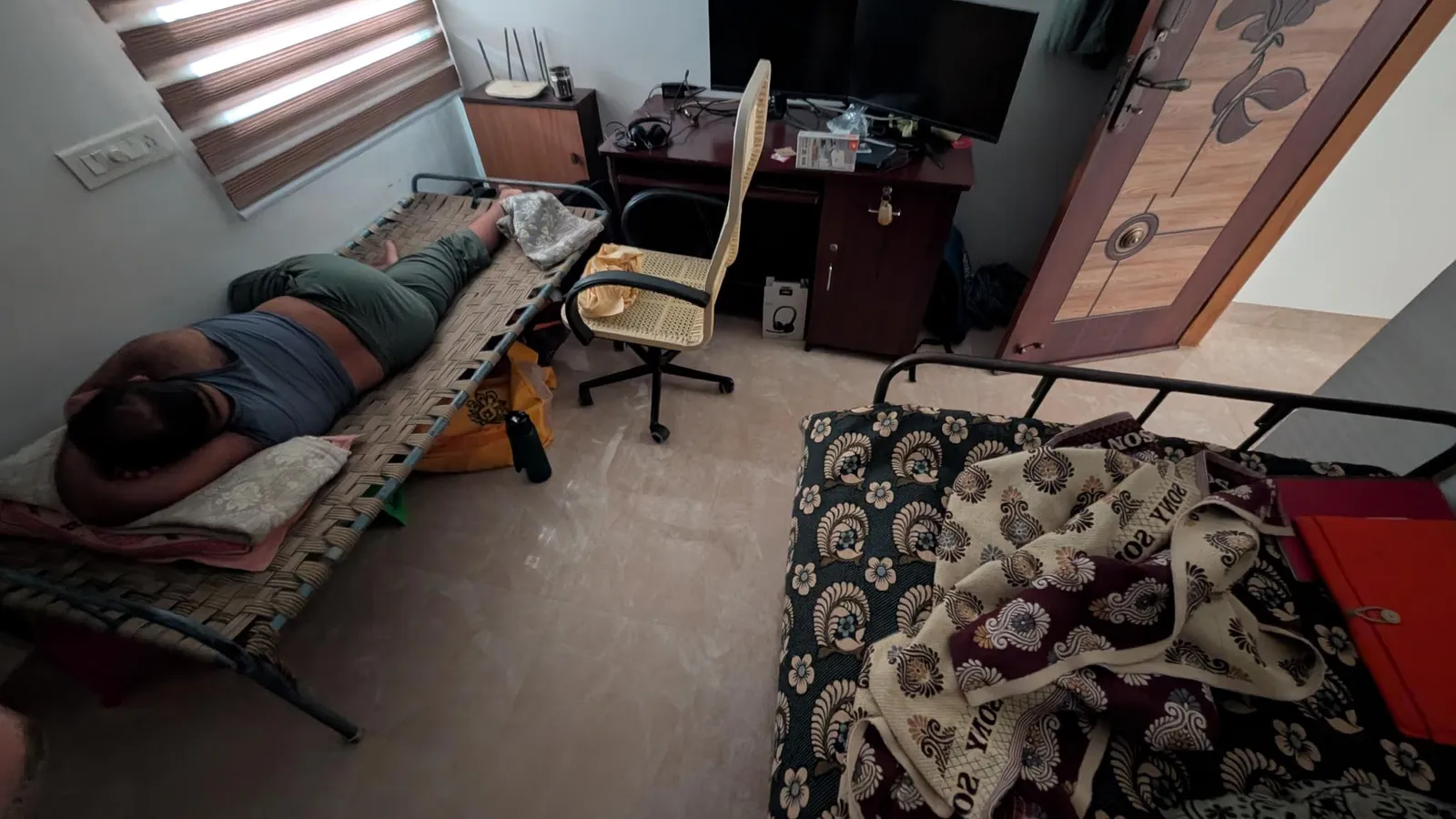
Prabhu went out to buy some medicine for me.
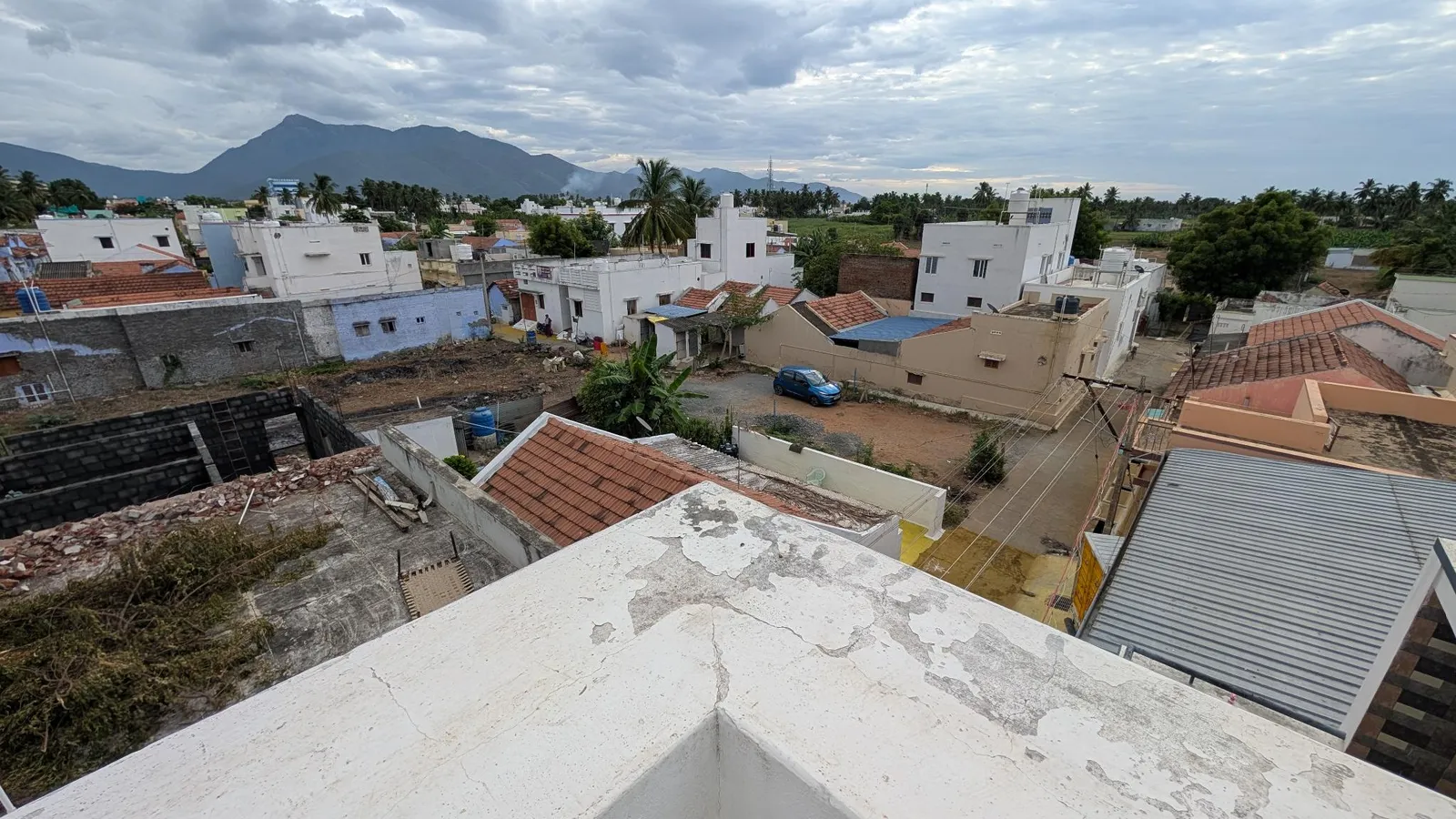
I went up to the rooftop and did my daily exercises.
Partly to activate my body.
Partly to support healing.
Partly to focus.
Mostly to arrive.
To stop thinking about where I had been or where I was going next and simply be where I was.
The view helped. Even one image from a rooftop like this carries so much information. Architecture. Climate. Culture. Daily life. Little details you don't notice until you stop moving.
When I came back down, we didn't even bother with breakfast. We just left.
Prabhu wanted to show me a place he said had been built around a thousand years ago, maybe even earlier. A dam.
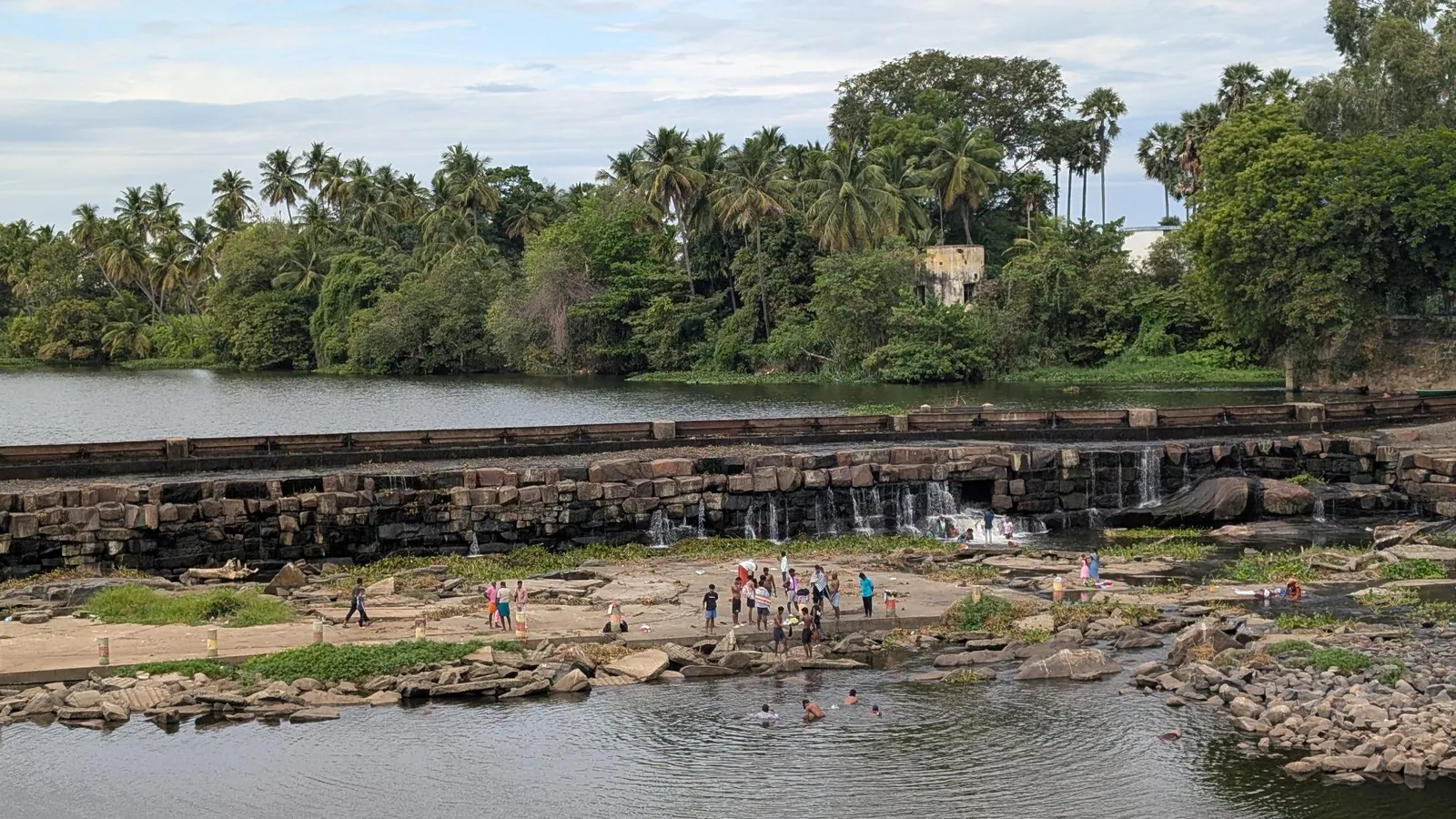
And, again:
Washing machine.
Bathroom.
Public swimming pool.
I was fascinated by the structure itself. The stones were cut remarkably precisely, and the whole thing had survived for an absurd amount of time. Things like that always trigger something in me. We love calling ourselves developed. We build higher. Faster. Bigger. But when you stand on something built centuries ago that is still doing its job, another question appears:
How much of what we build today is actually meant to last?
Maybe development isn't only about creating something impressive. Maybe it is also about creating something that survives us.
A few shop owners were already there selling fruit. I bought mango with chili, obviously with the highly scientific intention of burning the infection out of my body.
Did it work? No idea. Did it taste good? Absolutely.
Afterwards we visited another ancient place. A temple.
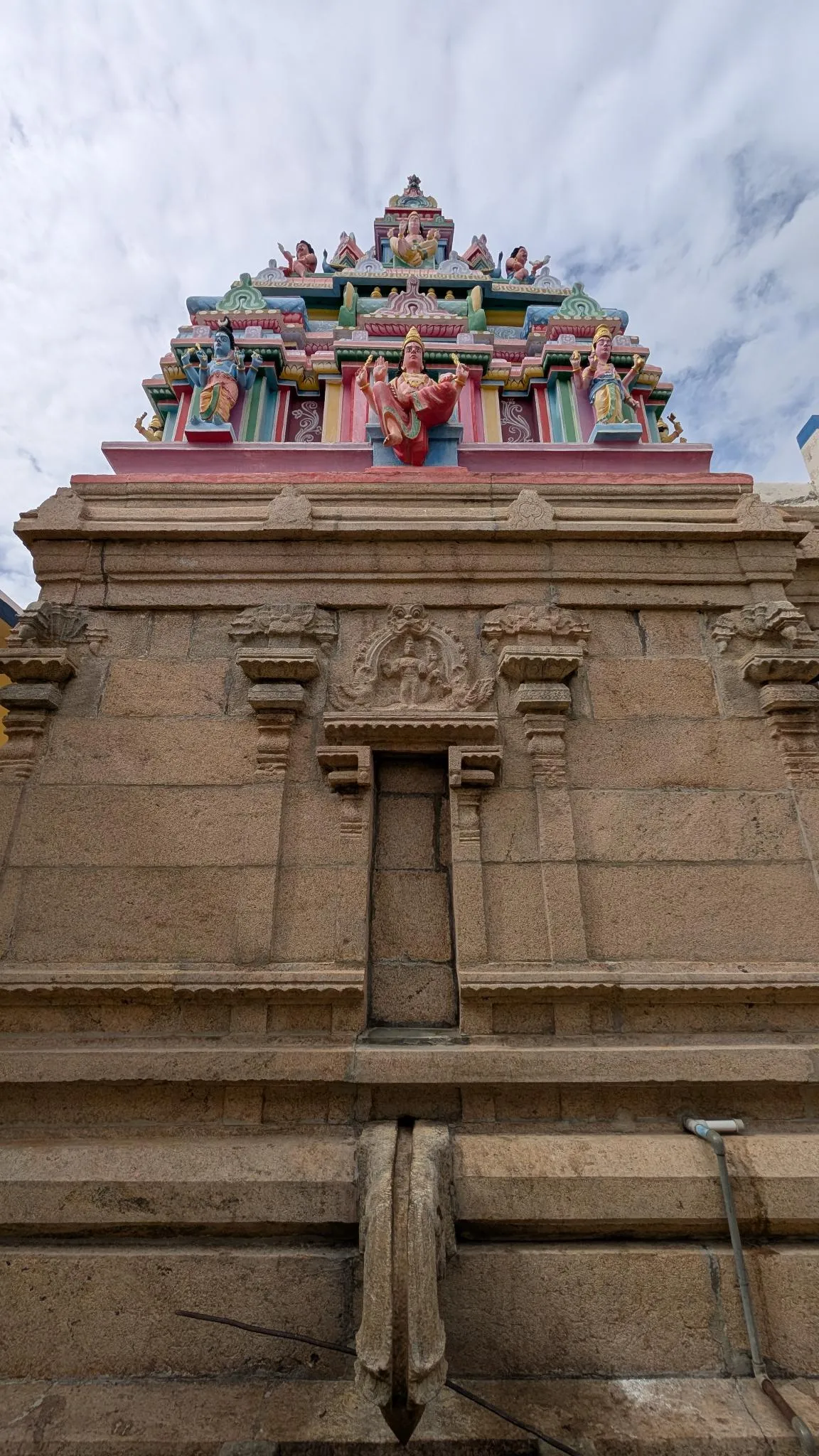
And there my brain got fed much more than my stomach had. It started with what I thought was a simple question:
Why do people shower before going to a temple?
I expected an answer of maybe twenty seconds. It lasted more than ten minutes. And I loved every second of it. Prabhu explained that cleansing before entering a temple is not simply about physical cleanliness. And not everyone follows exactly the same rituals every single time.
He gave the example of eating meat. According to the belief he described, when an animal is killed, it experiences fear, pain, stress, anger, hopelessness — intense negative states. The idea is that some of that remains connected to what is consumed. So by eating the meat, you don't only consume the physical substance. You also take in something of what happened around it. Again: That is the belief he was explaining to me. And according to that belief, water acts as a neutralizer. A cleanser.
Not only after eating meat. Negative states can come from anywhere. Anger. Conflict. Fear. Stress. So before entering a temple, the person cleanses themselves as much as possible.
I already found that interesting. But Prabhu continued. And then he answered a question I hadn't even thought of asking:
Why does being clean matter so much when entering a temple?
His explanation went back to ancient sages, monks, gurus — whatever word we want to use. People who spent enormous amounts of time meditating. They went inward. And deeper. And deeper. And eeeven deeper. And according to the tradition Prabhu described, something interesting happened:
It didn't get louder. It got quieter.
That resonated with me because similar ideas appear in yoga. The deeper or more refined the state becomes, the subtler the experience. That made me think of the language of energy, frequency and vibration that appears in both spiritual traditions and physics — even though they approach those ideas in completely different ways. I am not saying for certain they're automatically describing the same thing. But I find the overlap in language fascinating. One looks outward with instruments. The other looks inward through experience. And sometimes the metaphors start sounding strangely similar. According to Prabhu, the meditators eventually described hearing subtle sounds or frequencies.
One of the most famous is what we usually call:
Om.
Which is actually spelled
AUM .
More on that another day. The important part for this story was what came next. According to the explanation I was given:
Stone can hold vibrations.
And suddenly the logic of the temple ritual connected. Most temples are built from stone. People enter them. People chant. People pray. People perform rituals. And in that worldview, all of those actions affect the energetic atmosphere of the place. So if positive chants and intentions are repeatedly brought into the temple, they reinforce what is already there. If people bring agitation, fear, anger or other negative states inside, those influence the atmosphere too. Therefore: Clean yourself first. Physically. Mentally. Energetically.
Whether or not someone accepts that literally, I found the symbolism beautiful. Don't drag everything you've accumulated outside into the sacred space. Leave some of it at the door. Then Prabhu moved into prayer. And here again I found connections to ideas I've encountered in completely different traditions.
Christian. Buddhist. Yogic. Hawaiian. North African. Egyptian.
Different times. Different places. Different language. Yet again and again there is this idea that intention matters. That prayer matters. That inner state matters. That the person asking is not entirely separate from what unfolds. Different traditions explain that very differently. I don't pretend to know exactly what happens. But I find the recurring pattern difficult to ignore. And maybe that's already enough reason to keep looking.
The following picture, by the way, shows another example of human creativity.
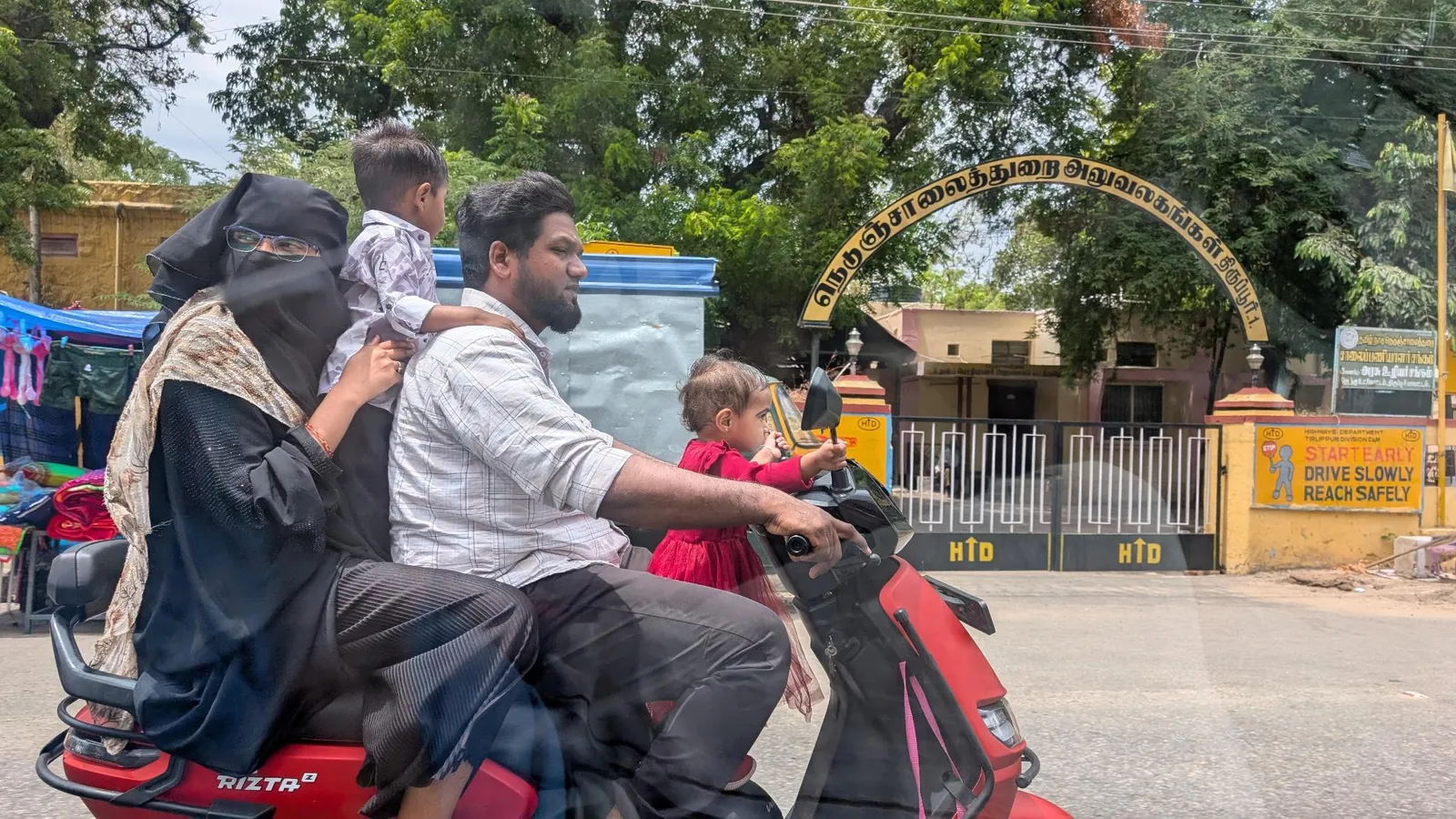
I mean... A fifth person would absolutely still fit. They should seriously consider having one more baby just to use the available space between the youngest and the dad more efficiently. Personally, I see enormous potential here. With the same principle, every five-seater car could become a twelve-person bus. Urban planners: Call me. We can solve the space problem.
Firewalking
Conveniently, one of the palm leaf libraries was located in the hometown of Prabhu's wife. We had to visit her parents anyway. Perfect. And somewhere along the drive, another topic appeared completely out of nowhere. One I had already encountered in stories from several cultures:
Firewalking.
Prabhu's wife believed in it. Prabhu was skeptical. The version they described involved burning coal, allowing it to cool somewhat, and then walking across it. Prabhu considered the practice superstition. His wife had actually done it. And while doing it, she burned her feet badly enough that she had trouble walking for several days. That obviously didn't strengthen Prabhu's confidence. What interested me was how different versions of firewalking appear in different places and traditions. Some are rituals. Some are tests. Some are demonstrations. Some are spiritual practices. And in some traditions, people describe extremely intense versions in which faith, preparation, purity or prayer supposedly determine whether a person is harmed. I have heard similar stories in relation to Hawaiian traditions. Whether every story is literally true, embellished, misunderstood, or based on some combination of physical technique and belief, I don't know. But the symbolic idea behind some of them fascinates me. The test isn't:
Can you impress someone or something else by walking through fire?
The test is:
Are you truly without sin?
In ancient traditions cleanliness is connected with sin. If one sinned, we "are" impure, we "feel" impure. And thats why the effect of the prayer cannot unfold and flow through us. It's essential to thus understand that those traditions understood something way simpler under the term sin, than we often do nowadays. They were pragmatic. A sin is:
"To harm other beings."
That immediately reminded me of the ethical principle that appears in many traditions:
Don't do to others what you would not want done to you.
Different words. Same basic direction. And that again leads me to something I have been thinking about for years: What if apparently separate spiritual traditions carry fragments of much older shared human insights?
Not necessarily because they all came from one literal historical school. Maybe they did. Maybe they didn't. But perhaps humans, in different places and different centuries, repeatedly discovered similar things about suffering, attention, fear, compassion, consciousness and behaviour. That possibility fascinates me much more than proving which religion was "first." The Hawaiian practices I had encountered were often described to me under the word:
Huna.
And somewhere along the way I started calling the deeper common ground I was looking for:
Hunam.
Why?
Because for me the search always leads back to the same place. Human. Hunam. Huna. What are we? What are we capable of? What helps us become more fully human?
And on this particular day, surrounded by ancient temples, strange traditions, family stories, rituals and a palm leaf library still waiting ahead of me... the name suddenly felt even more fitting.
The Palm Leaf Library
And then we arrived. Or at least... Our GPS claimed we had arrived.
What I saw was pretty much exactly what I had imagined:
A sacred place somewhere inside the chaos of Indian streets.
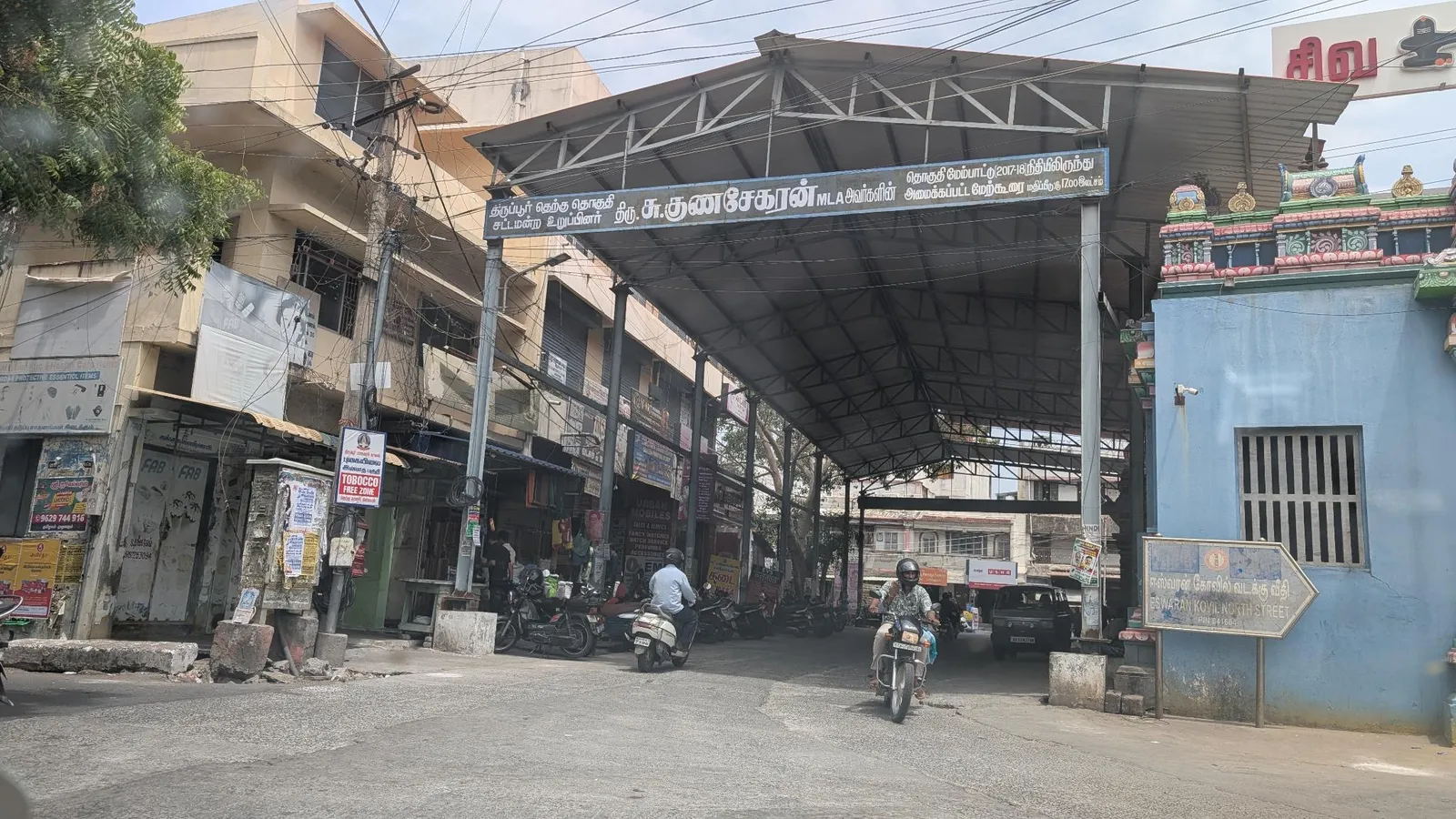
The map said we were at the correct location. But Prabhu couldn't find it. I couldn't find it. We called. After the call, we still couldn't find it. Perfect. Eventually, after some searching, we found what we were looking for. From outside, it looked like this:
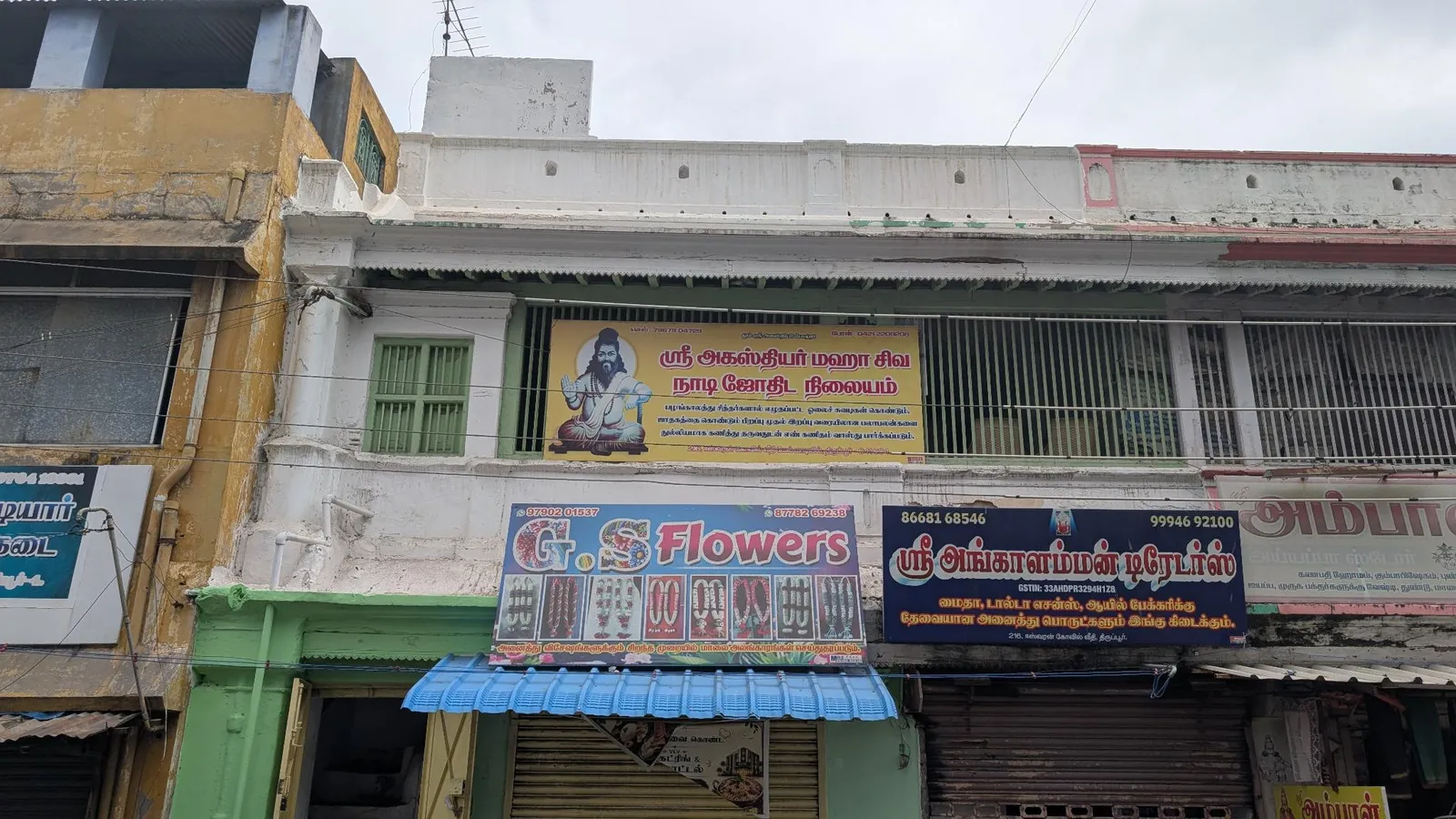
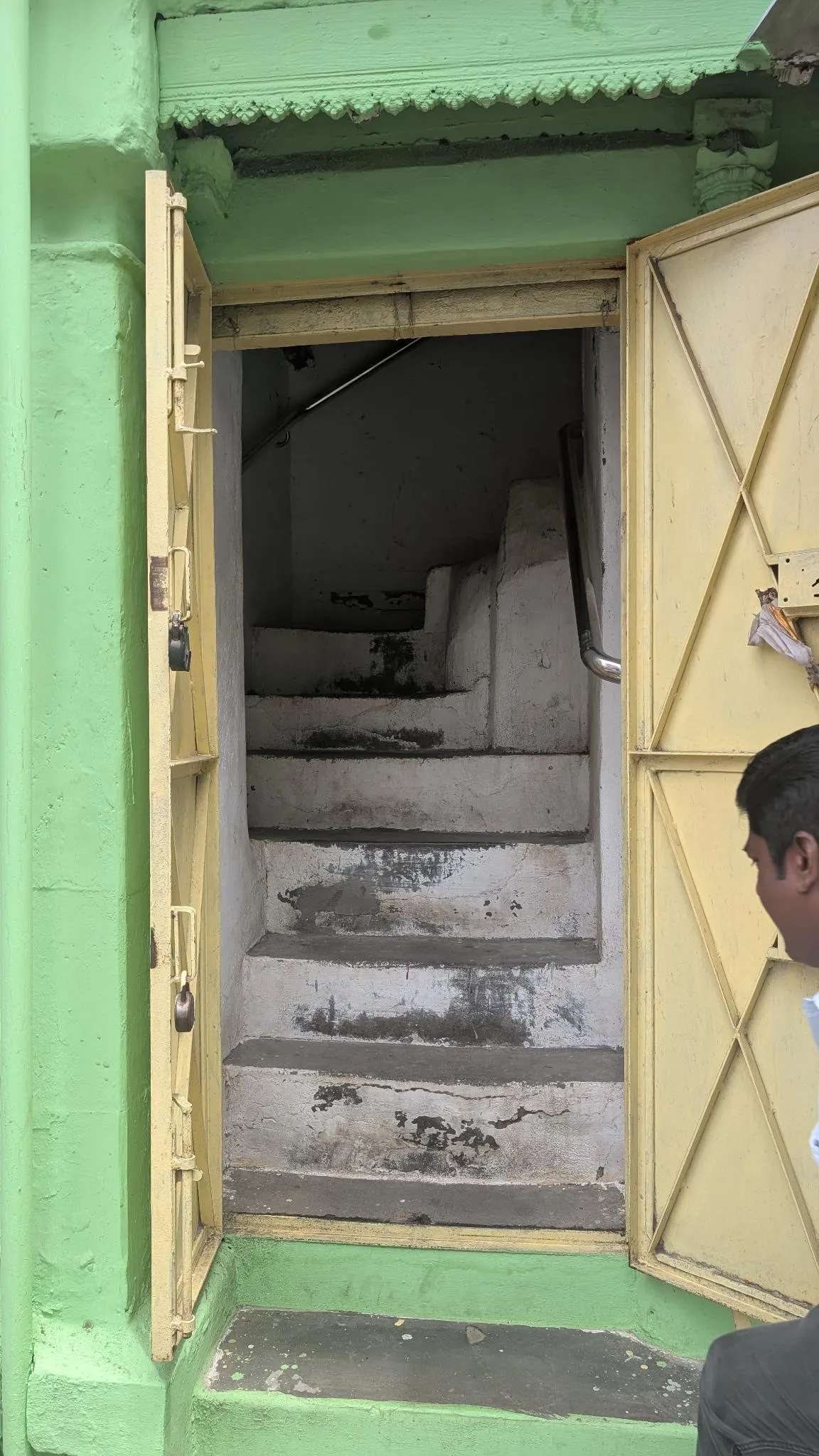
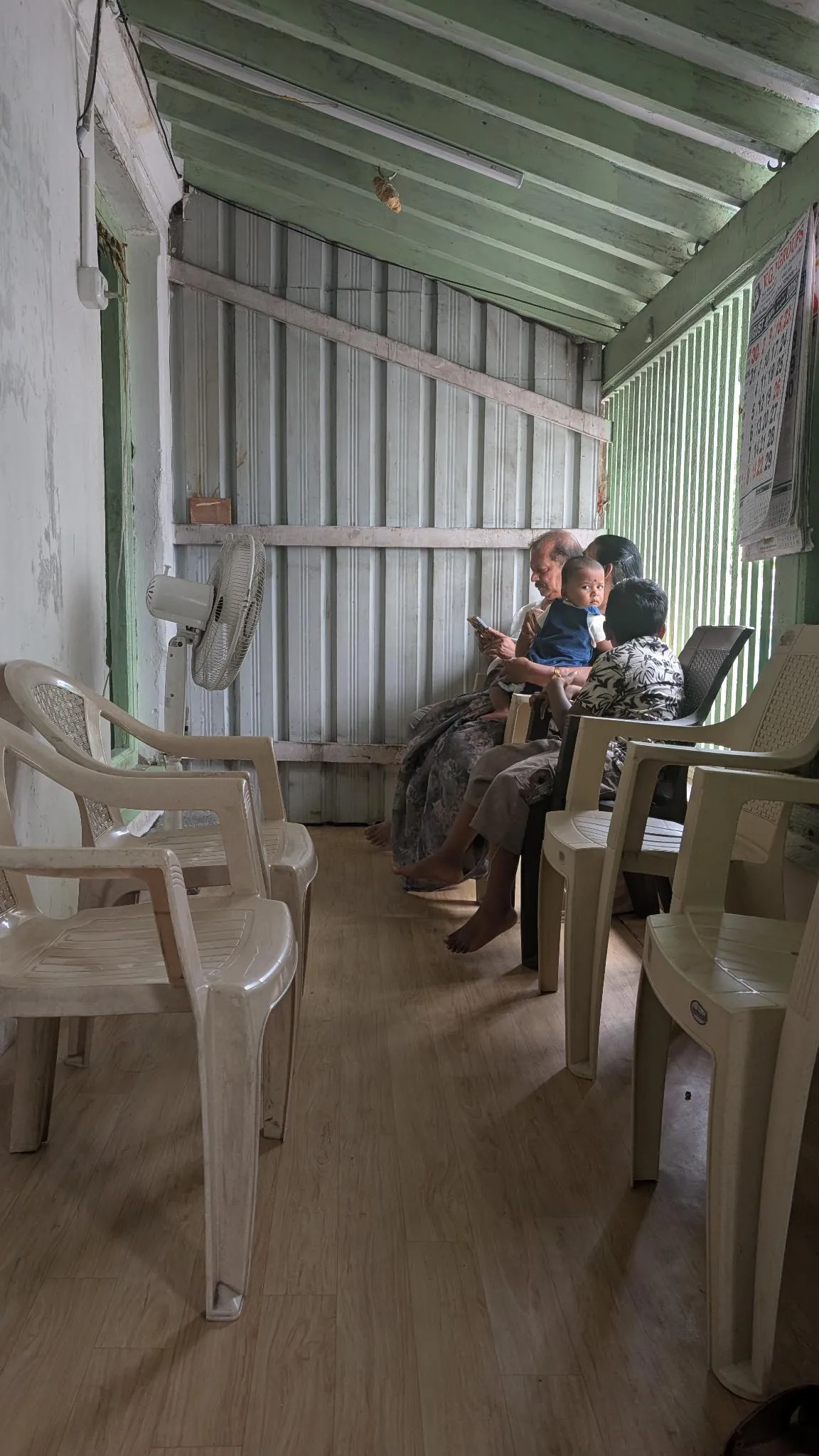
And from inside:
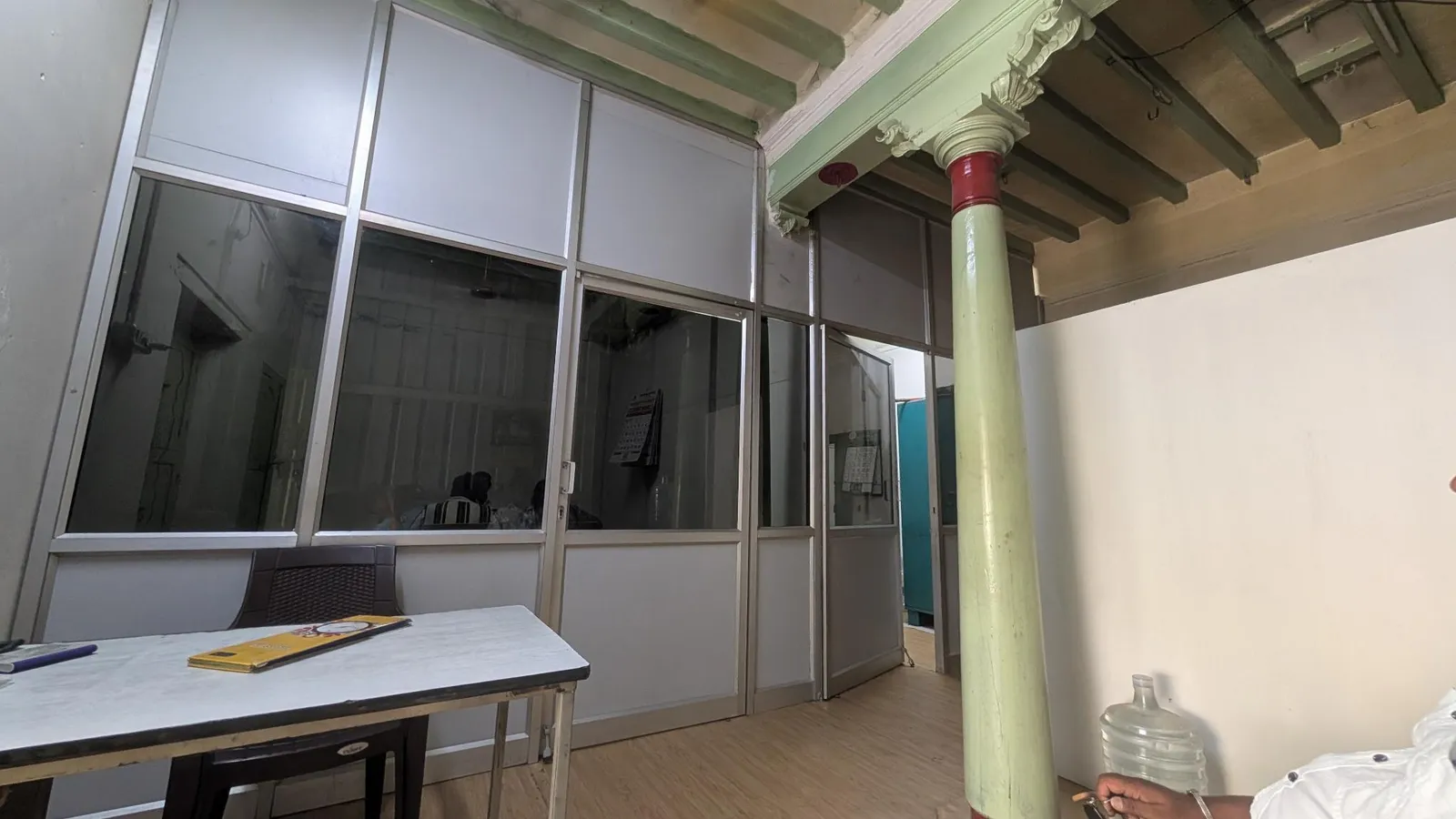
The waiting hall.
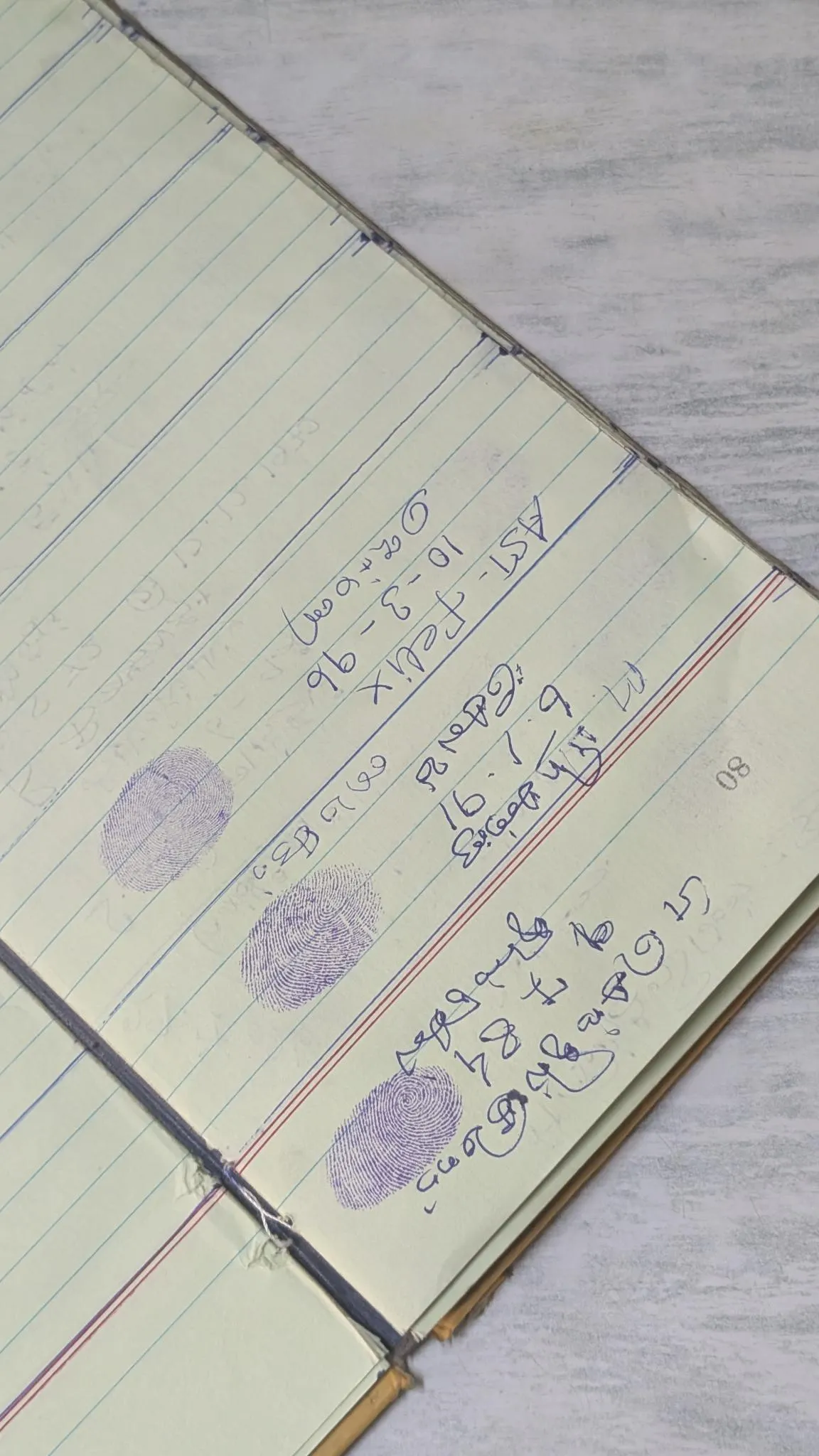
The registration counter.
The guest book.
The reading room.
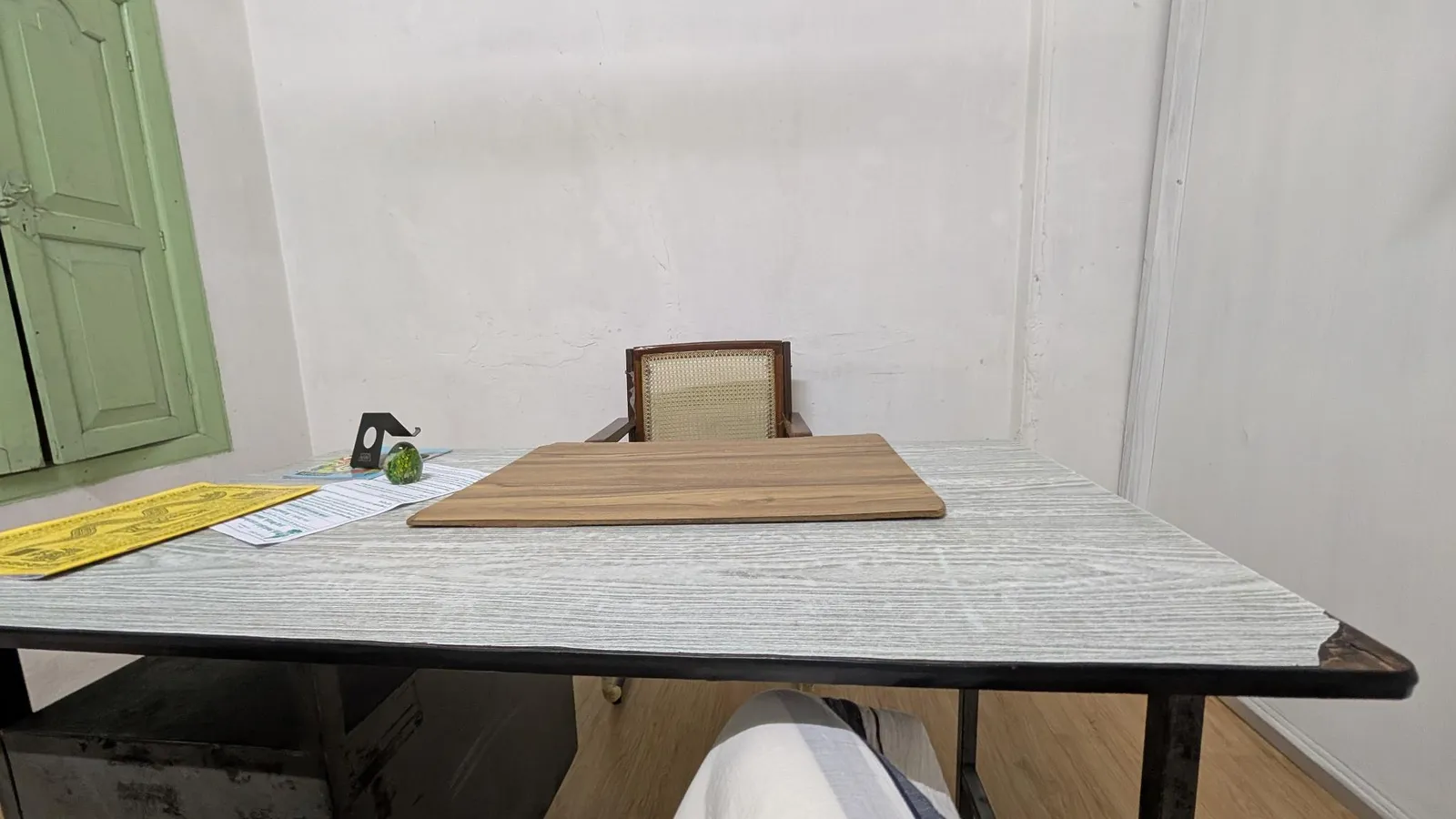
Out of respect, I didn't take pictures of the actual palm leaves or the reading itself. But with everyone's permission, I recorded the entire session. It was all in Tamil.
Here is what happened:
The reader came in carrying a small bundle. Maybe five centimetres high. Around forty centimetres long. Perhaps six centimetres wide. At the top and bottom were stronger pieces holding everything together. Inside were roughly fifty palm leaves. The whole bundle was tied with thread.
Before beginning, he gave us a short explanation.
According to him, ancient monks had spent years in meditation and developed the ability to perceive information about three timelines: past, present, future. They then recorded these life patterns onto palm leaves. The thumbprint was used as an identifier. He did not claim that a leaf necessarily existed for every human being alive. But according to the tradition, leaves exist for many people.
He also explained another belief: Not everyone is meant to receive a reading. According to him, if hearing the contents of your leaf is part of your life path, the opportunity eventually appears. If not, you could supposedly try a thousand times and still never receive it.
The leaves, he said, also deal with karma. What a person carries. What may have happened before. What they might experience later. Good. Bad. Pleasant. Painful.
And then the actual search began.
He opened the bundle. One leaf after another. Front and back. The ancient writers apparently didn't waste much space. The strange part was that these leaves can be very old while supposedly describing people living now. That alone was enough to make my brain happy. But the process became even more interesting.
He wasn't simply telling me: "This is your leaf." He had to test it. Each leaf contained details. If a detail didn't match my life, the leaf was rejected. Next.
Here are some examples.
"Was your birth closer to nighttime or daytime?"
Daytime. Not the right leaf. Next.
"Did your father have two marriages?"
No. One. Not the leaf. Next.
"Do your parents live separately?"
No. Next. ... Prabhu answered some questions for me when translation was needed.
"Any twins in your immediate family?"
No. Next.
...
"What degree did you complete?"
Master of Engineering in Renewable Energy.
"Two degrees or three degrees?"
Two. Bachelor and Master.
"Are you working a salaried job?"
No. Not the leaf. Next.
...
"Current relationship?"
No. Next.
"Are you the youngest child in the family?"
Yes. But the leaf was saying not. Still not the leaf. Next.
...
"Have you worked in multiple countries?"
Yes.
"Business or employed?"
Employed. Not the leaf. Next.
"Teaching job for at least the last five years?"
No. Next.
"Completed your Master's six years ago?"
No. Not the leaf.
"Bachelor's degree when?" "Did you work between your Bachelor's and Master's?"
No. Next.
"Father or mother in a government job?"
Mom. Teacher.
"Father also teaching?"
No. The leaf described the mother as a government teacher and the father as a private teacher. Not mine. Next.
Then one got interesting.
"Did you start a school, language school, or training centre?"
Yes.
"Mother retired or still teaching?"
Retired.
"Do your parents receive pension income?"
Yes.
"Do you have a loan?"
No. Not the leaf. Next.
Then came one that made me sit up. The reader checked my name. In Tamil. Felix. Check.
"What is your mother's name?"
Ingrid. Check. Okay. Now I was interested. Two names matched. Then:
"What is your father's name?"
Siegfried. The leaf said something different. No. Not the leaf. Next. That was cruel. For about three seconds I thought we'd found it.
Then:
"Any miscarriages some years ago?"
No. Not the leaf. Next.
And so it continued.
All in all, the search took around twenty-five minutes. You get the idea. The leaf is supposed to match precisely. Not vaguely. Not mostly. If enough details diverge, it is rejected. And the longer we continued, another thought slowly appeared in my head:
Do I even want them to find it? The past? Yes. That would be fascinating.
Simply as some kind of confirmation that the system works. But the future? I'm not sure. Do I really want someone to tell me what is supposedly waiting for me? Maybe not.
The leaves continued. One after another. Until eventually we reached the result:
Mine wasn't in the bundle.
That was it. No prophecy. No dramatic revelation. No "Felix, in seven years you will have gotten a pet dog called Arun." Nothing.
They explained that the bundles rotate. In roughly two weeks, new ones would arrive. Then they could check again. Prabhu could return for me and we could join by video call. So the story remains open.
Naturally, I had questions.
How many libraries like this exist?
According to the people there, at least four locations in Tamil Nadu, plus one in Delhi and one in Bangalore.
Are all the leaves written in Tamil?
Yes, they said, because the original sages who created this particular collection used Tamil.
How does the fingerprint system work?
They explained that although every fingerprint is unique, fingerprints can be classified into broader categories. They use the thumb impression to determine which group of leaves to search. Within that group are huge numbers of potential life records. Then the matching process begins. Bundle by bundle. Leaf by leaf. Question by question.
We talked a little more. Then the session ended.
And finally I could return to a message Petra had sent me earlier.
She asked:
Don't we all carry our palm leaf inside ourselves?
And:
Can we really find our answers if we constantly search outside ourselves?
I like those questions. A lot. Because they're uncomfortable in the right way. I didn't go to the palm leaf library because I needed someone to tell me what to do with my life. I didn't go because I wanted certainty. I went because I am fascinated by what humans create, preserve, believe, perceive and experience. I wanted to see this place with my own eyes. And I did. I was impressed. Not because I walked out knowing my future. I didn't. But because the process was far more detailed than I had expected. And sometimes that is enough. You don't need an answer. Sometimes you just need your existing questions to become bigger.
One thing I can offer:
If you're seriously interested in such a reading, I can help arrange one.
As for mine? We wait. Let's see what happens when the next bundles arrive. I'll keep you posted.
Goodbye Tamil Nadu
Then we headed home. I was exhausted. The kind of exhausted where standing starts feeling suspiciously similar to sleeping. Look at me. And that's still one of the better pictures.
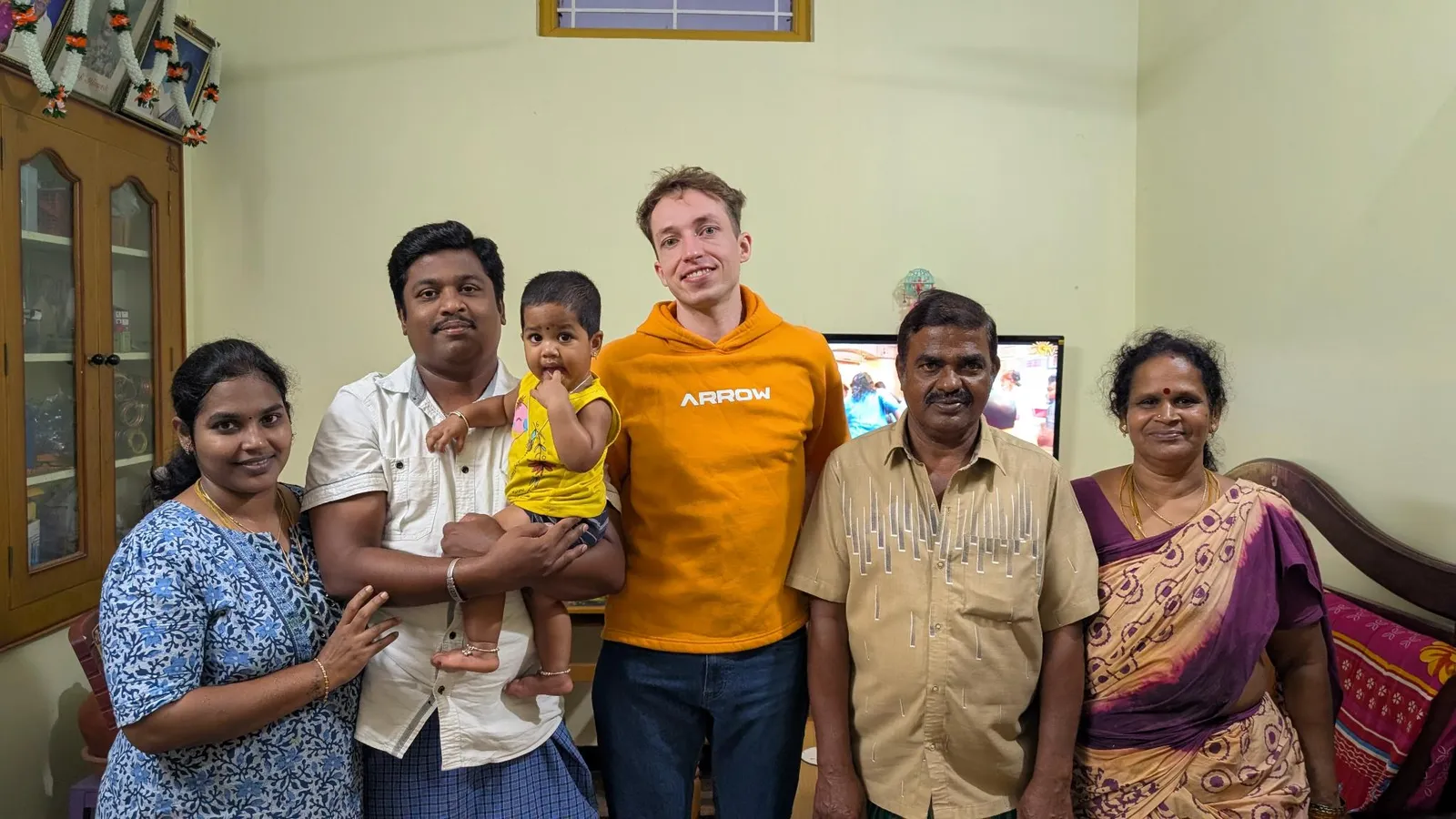
We had lovely homemade food. Unfortunately, my cold and my stomach were not equally enthusiastic. My taste buds had basically gone on strike. And my stomach had already filed a formal complaint about being overfilled for several consecutive days. So I ate what I could. Then I took a short nap.
Thank you, Prabhu. Later, I was genuinely happy when Navil came to drive me to the airport. Tamil Nadu had been incredible. But it had also been intense. Very intense. I hadn't really had time to rest, recover, or process anything. So apparently I would have to do that in Ladakh. Which was quite convenient. Because that's exactly what people recommend there anyway. Arrive. Do almost nothing. Give your body time to adjust. Especially when the place where you land is already more than 3,500 metres above sea level.
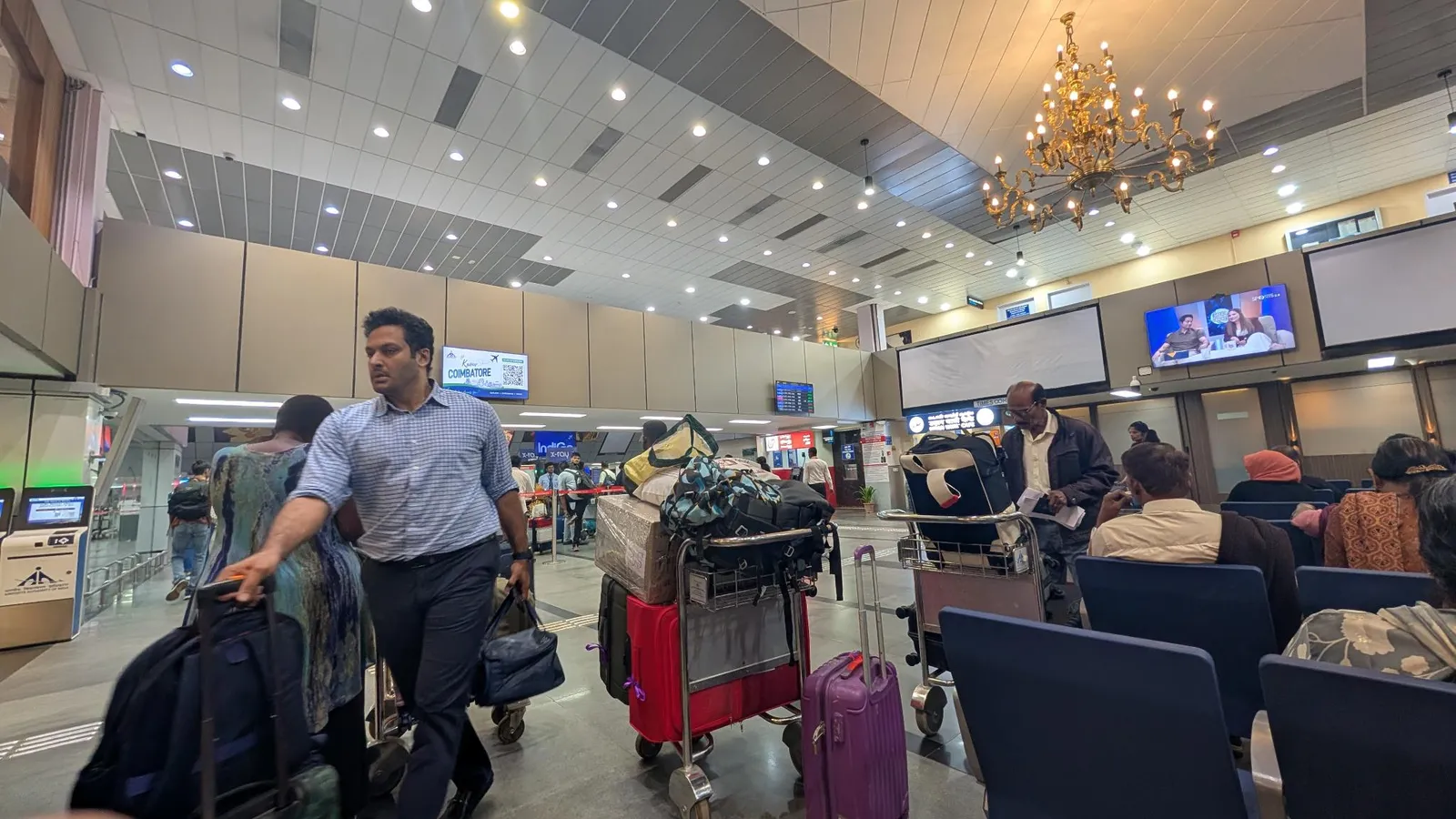
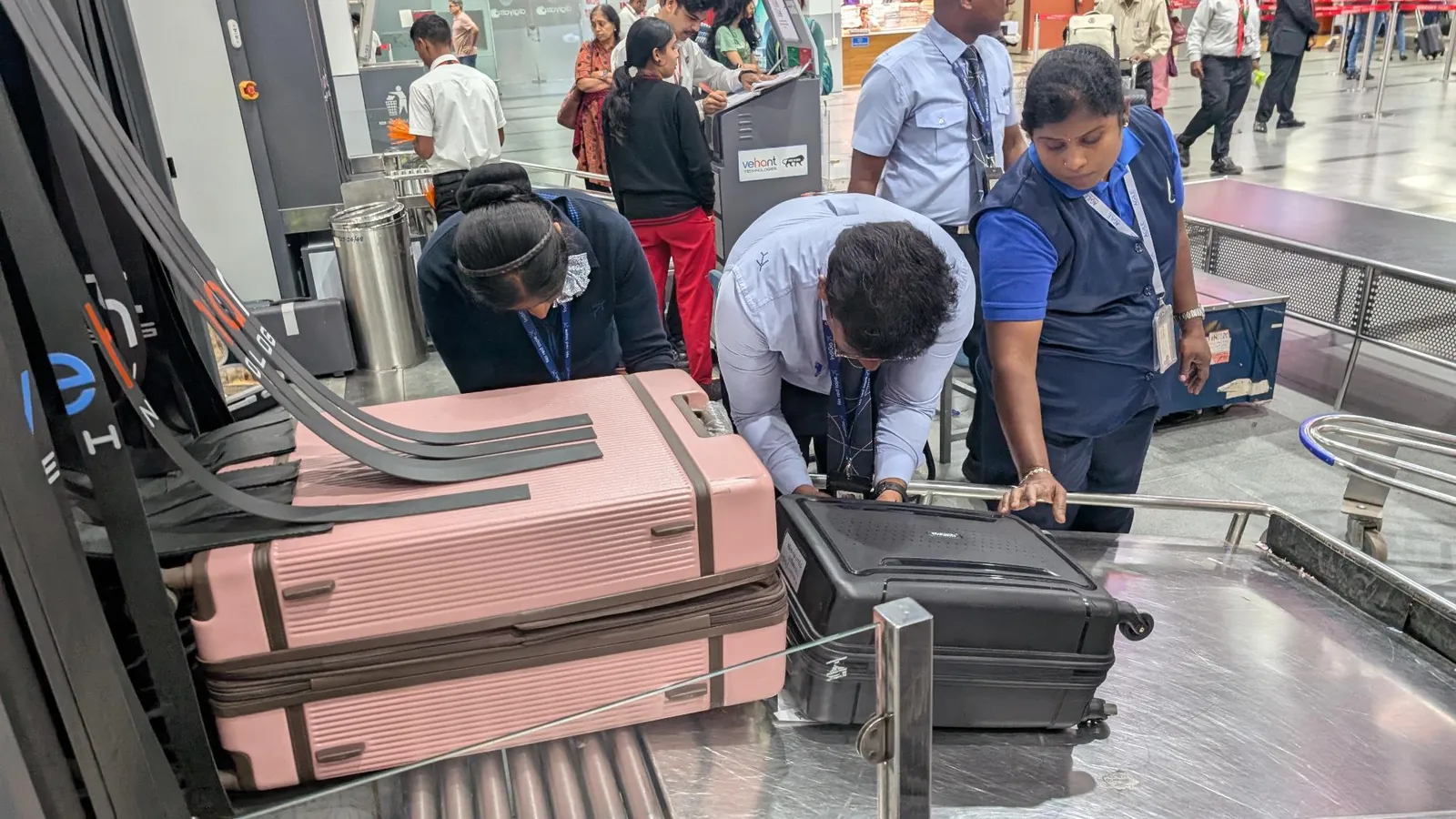
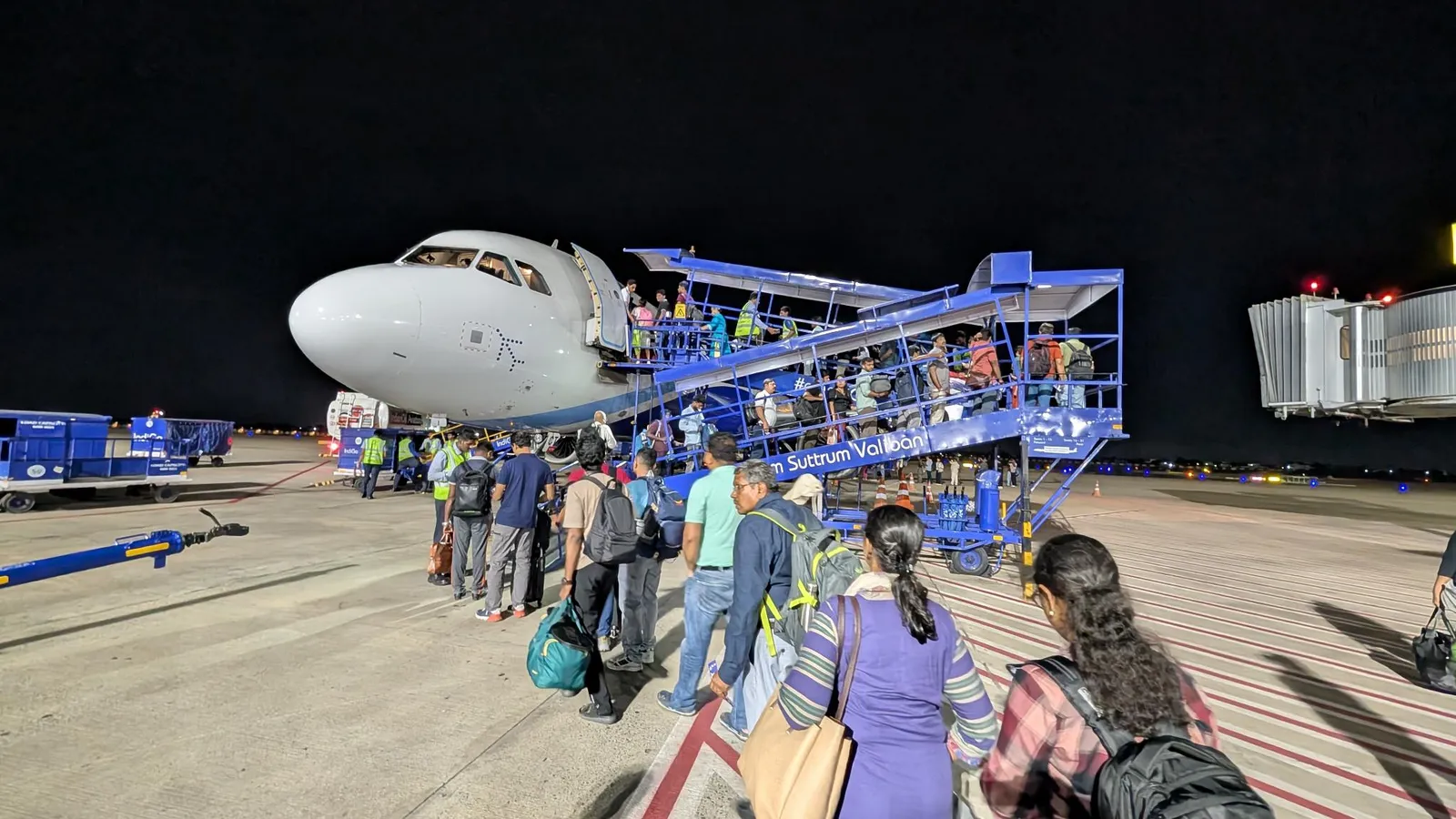
At the airport I couldn't really sleep. I didn't have enough time for proper sleep anyway. So I just sat there. And, as usual in India, I wasn't alone for long. A really nice guy deliberately sat down next to me. His name was:
Raman.
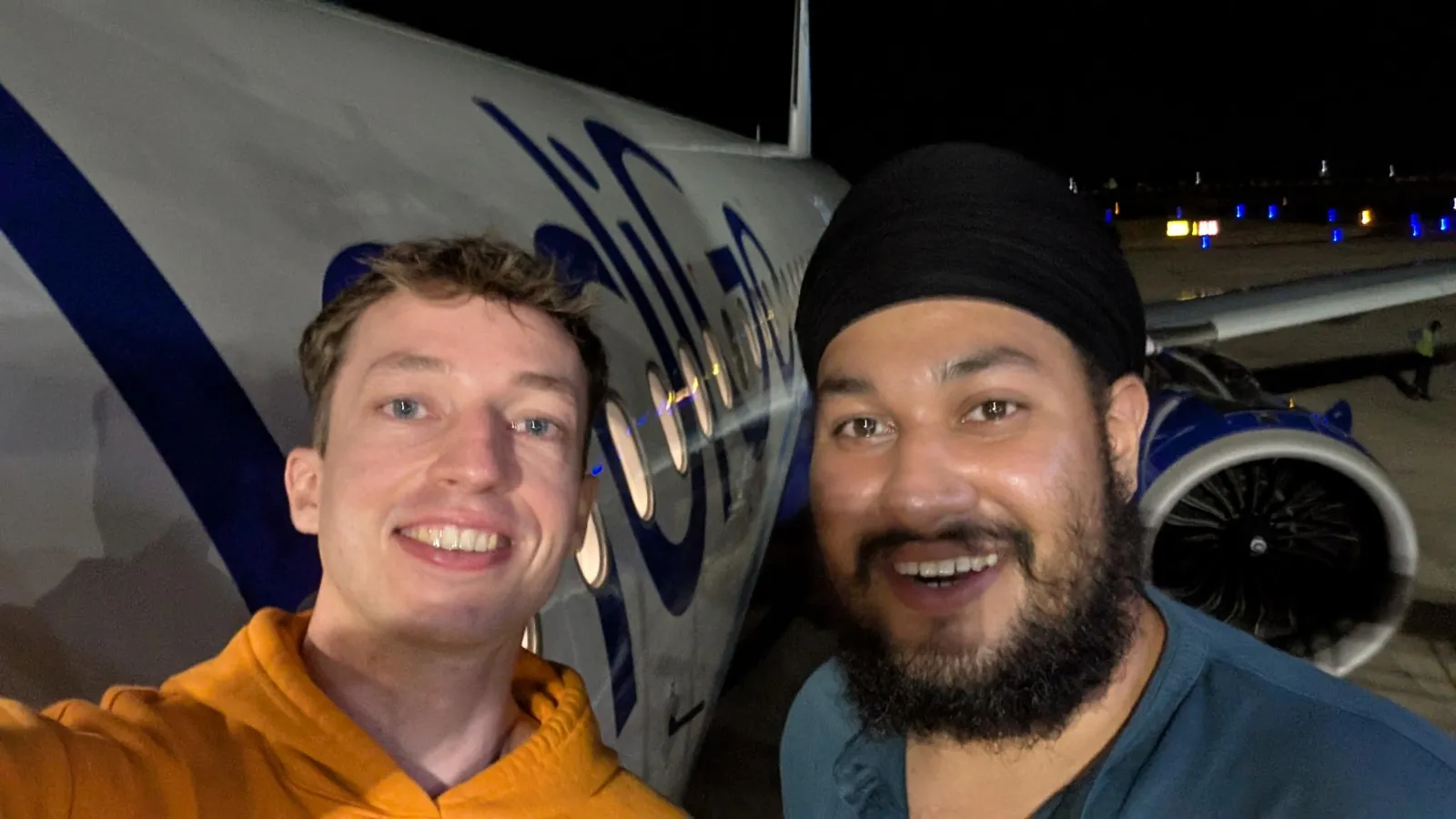
We started talking. About all sorts of things. Including family. At some point he asked:
"Do you live with your parents?
With your brother?"
"Yes."
He looked relieved.
"That's good."
Then I shocked him.
"In Germany, that's often seen as weakness."
His face changed immediately. He genuinely couldn't understand.
"Why...?
Why?"
Then he explained.
"There is a bond.
A connection.My dad lost his brother years ago.
And he misses him STILL.
Because of the bond.
You should live together and take good care of family."
What else is there to say? Cultures are different. Not automatically better. Not automatically worse. Different. And sometimes another culture makes you look at your own from an angle you never considered before.

Arriving in Delhi was fun. The famous Indian rush started before the plane had even fully stopped. Within seconds, the aisle was packed. People standing. Bags appearing. Everybody apparently racing toward an invisible finish line. No rush for me. I had a six-hour layover.
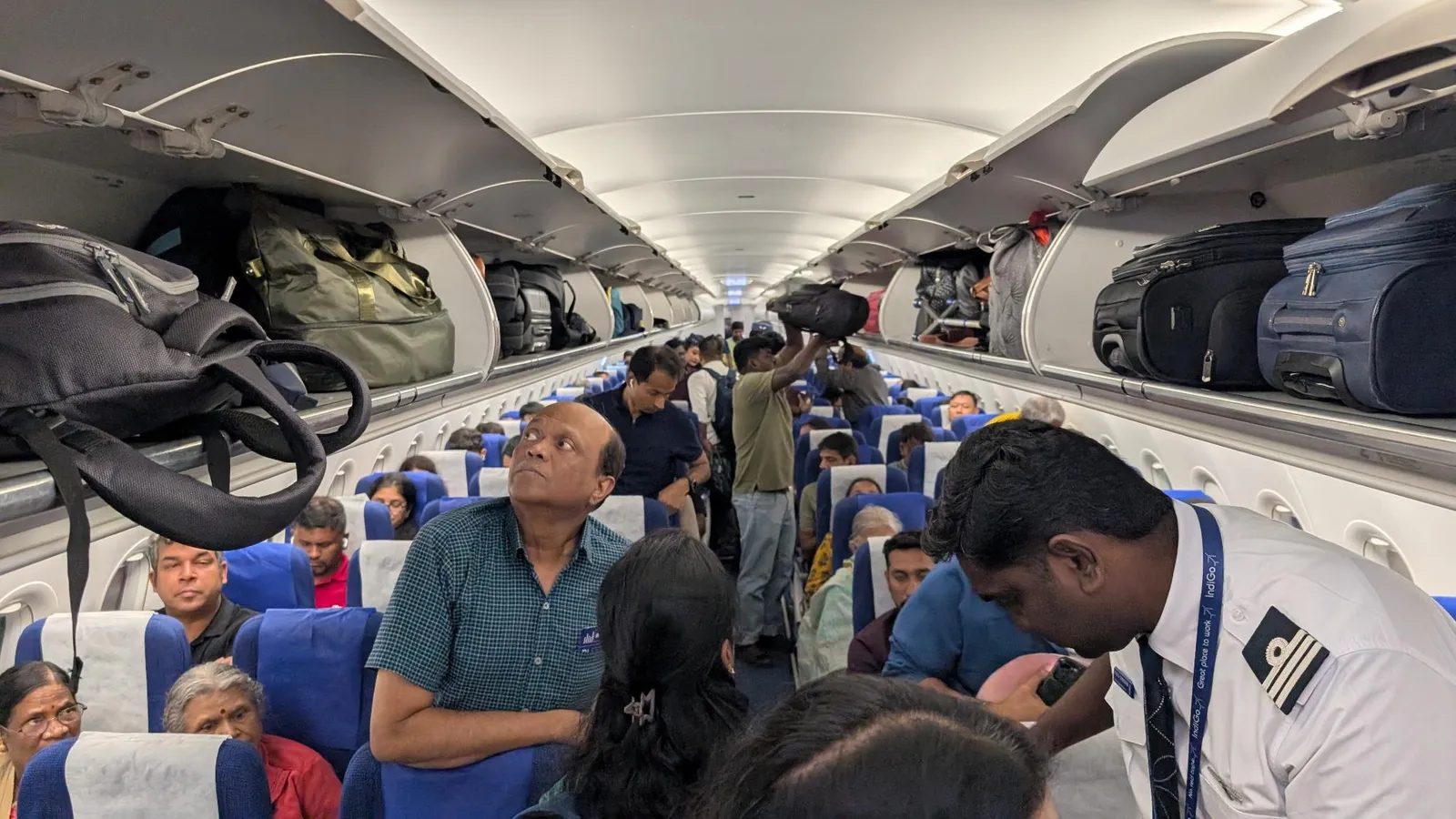
For once, six hours sounded wonderful. Time. Nothing to do. Nowhere to go. Just rest. I was also the only person from that flight continuing onward to Ladakh.
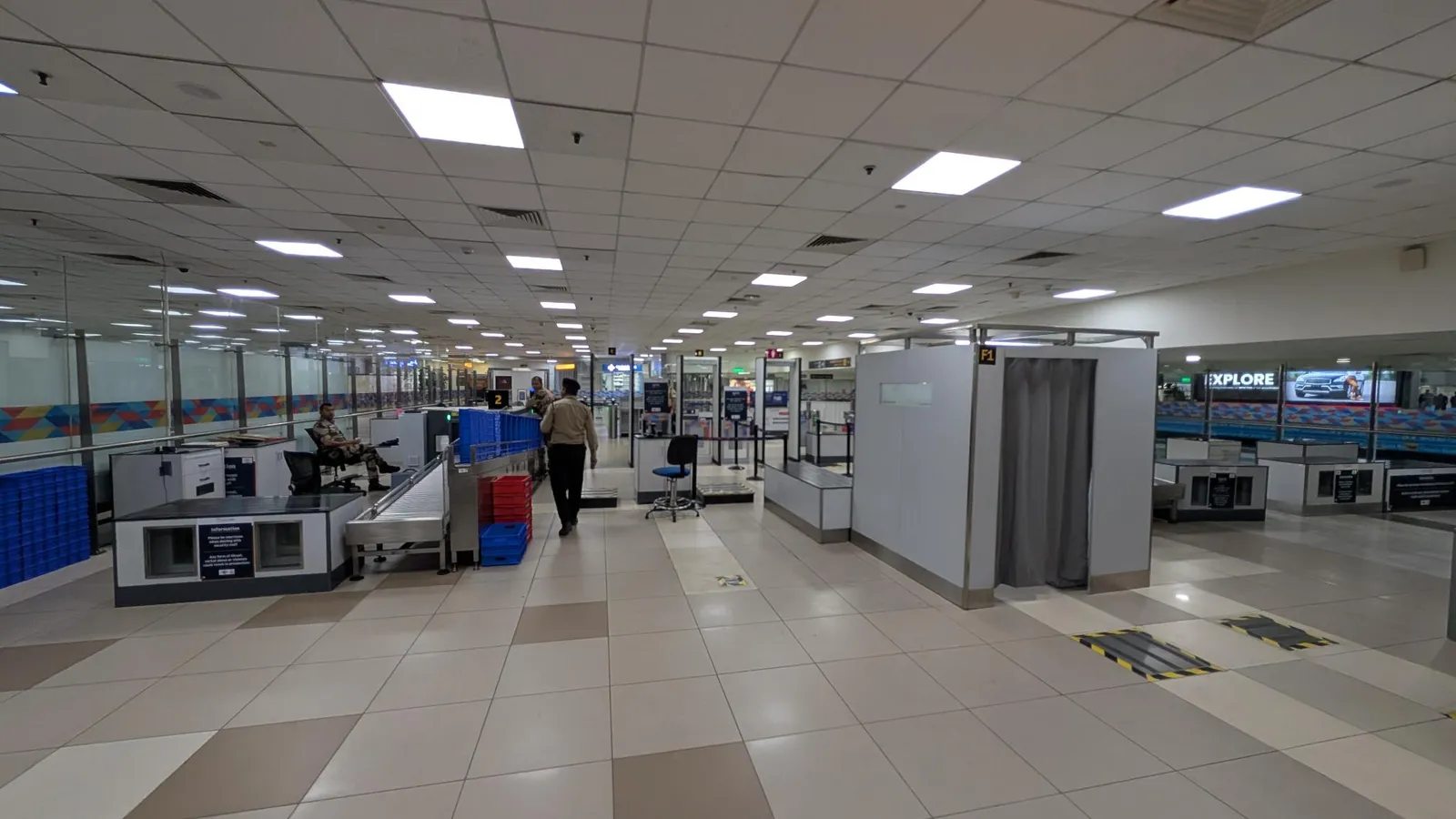
And with that day behind me, another chapter closed. Kerala was gone. Tamil Nadu was gone. Hari was gone. Prabhu was behind me. The temple. The dam. The palm leaves. All of it suddenly became memory.
And ahead of me: Ladakh.
Something completely new. I didn't really know how to feel about it. It was one of those strange in-between moments. You're no longer where you were. But you're not yet where you're going.
Excited? Or afraid?
I think... it was both.
Be Human, the Rest follows.